How to Spend Less Time Online Without Going Off-Grid
A
Allan Combs
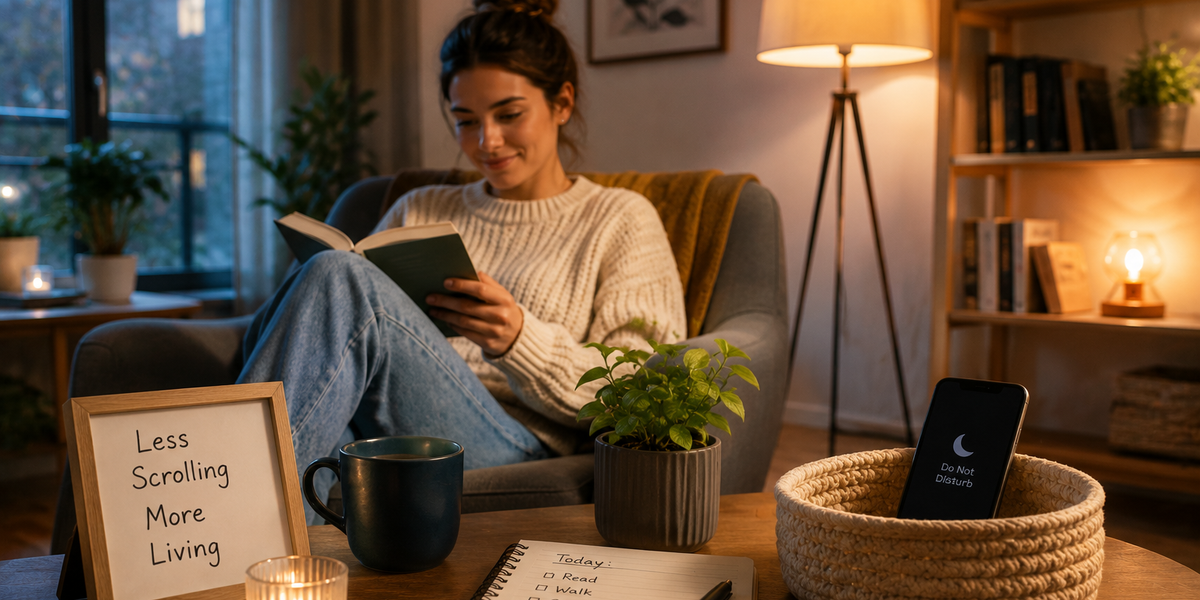

The internet is not something most of us can—or particularly want to—quit.
We work online. We make plans through messages. We use maps, banking apps, calendars, news sites, music, podcasts, and group chats. Our phones contain genuinely useful tools alongside the apps that somehow turn five spare minutes into 45.
That is what makes reducing screen time complicated. Going completely offline is unrealistic for most people, but being permanently connected can leave you distracted, overstimulated, and strangely short on time.
The solution does not have to be a dramatic digital detox. Often, it is about changing a few defaults so that being online becomes something you choose rather than something you constantly drift into.
Before deciding that you spend “too much time online,” look at what that time consists of.
Most phones and computers provide some form of screen-time or digital wellbeing report. Check yours without immediately judging the number.
Three hours spent using maps, reading, video calling family, and listening to music is different from three hours of automatic scrolling that you barely remember afterward.
Look for the apps you open most often and how frequently you pick up your phone.
You may discover that one or two apps account for a surprisingly large percentage of your recreational screen time.
Those are the places where small changes will have the biggest effect.
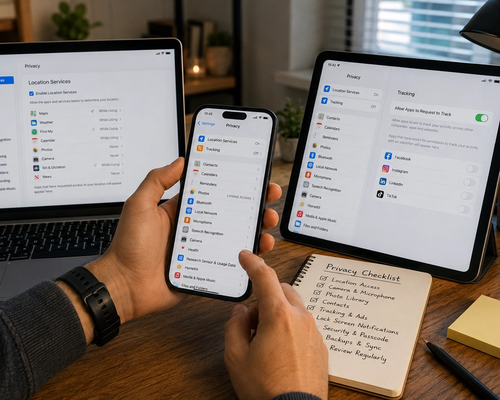
Notifications create artificial urgency.
A shopping app announces a sale. A social platform tells you someone posted something. A game reminds you that you have not opened it today.
None of these things required your immediate attention until your phone decided they did.
Go through your notification settings and be selective.
Keep alerts that genuinely need to reach you quickly, such as calls, important messages, calendar reminders, or essential work communication.
Turn off promotional notifications and unnecessary updates.
You can still check those apps whenever you want. The difference is that you decide when the interaction begins.
That small shift—from being summoned to choosing to look—can dramatically reduce how often you reach for your phone.
You do not necessarily need to delete social media.
Start by making it less automatic.
Remove distracting apps from your home screen. Log out after using them. Turn off badges showing unread counts. Use app limits if they help.
Even moving an app into a folder can create a tiny pause between impulse and action.
That pause matters.
Many phone habits happen without a conscious decision. Your hand opens the same app whenever you encounter ten seconds of boredom.
Adding a little friction gives you enough time to notice what you are doing.
Sometimes you will still open the app.
At least you chose to.
Trying to use your phone less everywhere can feel vague and difficult.
Creating specific boundaries is easier.
Maybe the dinner table becomes phone-free. Perhaps the bedroom does. You might decide not to use your phone while walking somewhere or during the first 20 minutes after waking up.
Choose boundaries that fit your actual life.
The goal is not to create strict rules that make technology inconvenient. It is to protect a few parts of the day from constant interruption.
Meals are particularly useful because they happen repeatedly. Put your phone somewhere you cannot automatically reach for it and simply eat.
At first, the absence may feel surprisingly noticeable.
That tells you something.
If scrolling fills an hour of your evening and you simply remove it, you now have an empty hour.
Your brain will probably suggest scrolling.
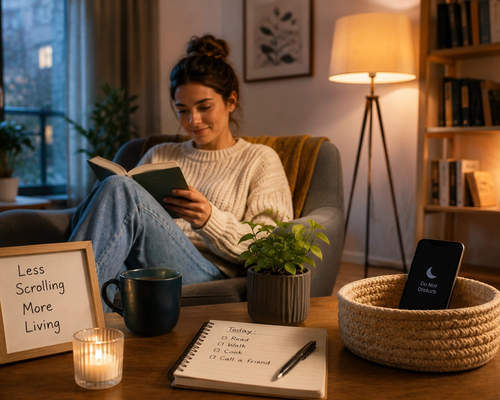
Give yourself alternatives.
Leave a book beside the sofa. Keep a magazine on the table. Go for a short walk. Cook something. Call someone. Work on a puzzle. Listen to an album without simultaneously doing something else.
The replacement does not need to be productive.
Watching a film intentionally can feel completely different from spending the same amount of time jumping between short videos.
The objective is not maximizing every minute.
It is choosing what you want to do with it.
Your phone does not need to accompany you from one room to another.
Leave it charging in the kitchen while you shower. Keep it on a table while you play with your children. Go into the garden without it. Walk around the block without bringing it occasionally.
Physical distance is surprisingly effective.
If your phone is beside you, checking it requires almost no effort. If it is upstairs, you are unlikely to interrupt dinner because you suddenly wondered whether someone replied to a message.
You do not need to be unreachable for hours.
Start with ten minutes.
Then notice whether anything terrible happens.
Usually, remarkably little does.
Constant checking creates the feeling that you are always online even when each individual interaction is short.
Instead of opening email every few minutes, check it at particular points during the day when your work allows.
Do the same with news or social media.
You might decide that you will catch up after lunch and again in the evening rather than repeatedly refreshing throughout the day.
This works particularly well with information that rarely requires an immediate response.
You are not consuming less because you have forbidden yourself from looking.
You are grouping the same activity into a smaller number of intentional sessions.
Waiting has almost disappeared.
The elevator takes 30 seconds, so we check our phones. Someone goes to the bathroom at a restaurant, so we scroll. We stand in line for coffee and immediately look for entertainment.
Try occasionally doing nothing instead.
Look around. Think. People-watch. Let your mind wander.
It may initially feel uncomfortable because your brain expects stimulation whenever there is empty space.
But boredom is not an emergency.
Those tiny unoccupied moments are also where thoughts, observations, and ideas have room to appear.
You do not have to fill every gap.
There is no perfect amount of screen time.
Someone who works remotely will naturally spend more time online than someone whose job happens entirely offline. Some friendships genuinely live in group chats. Some hobbies depend on digital communities.
The goal is not achieving an impressive number on a screen-time report.
It is making sure the internet is serving your life rather than quietly consuming every empty part of it.
Keep the useful things. Keep the funny videos and group chats too.
Just create a little distance between wanting to go online and automatically being online.
You do not need to disappear from the internet.
Sometimes you simply need to remember that you are allowed to leave it for a while.

Attention rarely feels important while we are giving it away. We glance at a notification during dinner. We half-listen to someone while thinking about what we need to do next. We watch a film while checking our phones, walk through familiar streets without noticing them, and finish entire days unable to remember much of what actually happened.

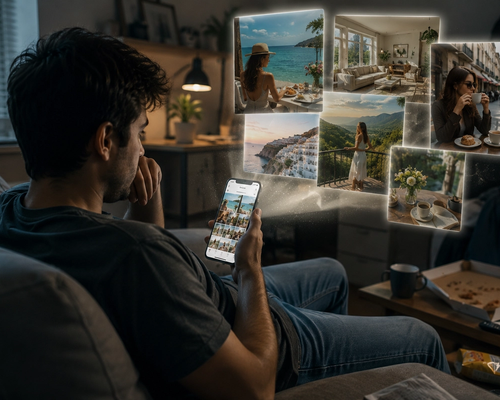
We have become very good at recognizing lives that look interesting. They involve constant travel, impressive jobs, beautiful homes, busy social calendars, ambitious projects, expensive restaurants, dramatic announcements, and enough photographs to prove all of it happened. Online, an interesting life can start to resemble a continuous highlight reel.
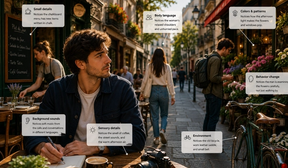
Some people seem to move through the world with a different level of resolution. They notice when someone has changed their hair slightly. They remember the name of the waiter from a restaurant they visited months ago. They spot an unusual building on a street everyone else has walked down a hundred times. They can tell when a friend’s mood has shifted before the friend says anything.

Sometimes you arrive somewhere completely unfamiliar and feel strangely at ease. You do not know the streets. You have no memories attached to the buildings. You may not even speak the language. Yet within a few hours, something about the place feels comfortable. You can imagine having a favorite café there, knowing which market to visit on Saturday, or walking the same route home every evening.

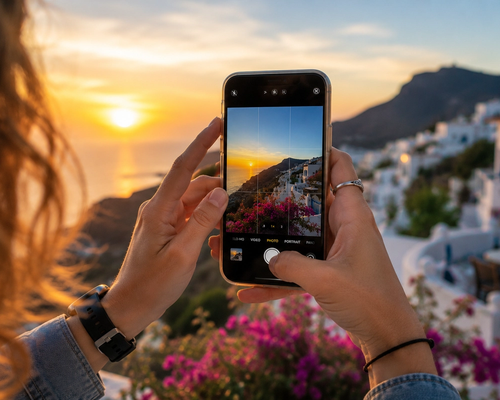
You do not need an expensive camera to take photographs worth keeping. The phone already in your pocket is capable of producing remarkably good images—and, more importantly, it is probably the camera you actually have with you when something worth photographing happens.

The internet is not something most of us can—or particularly want to—quit. We work online. We make plans through messages. We use maps, banking apps, calendars, news sites, music, podcasts, and group chats. Our phones contain genuinely useful tools alongside the apps that somehow turn five spare minutes into 45.