The Hidden Cost of Optimizing Everything
H
Hassan Keith
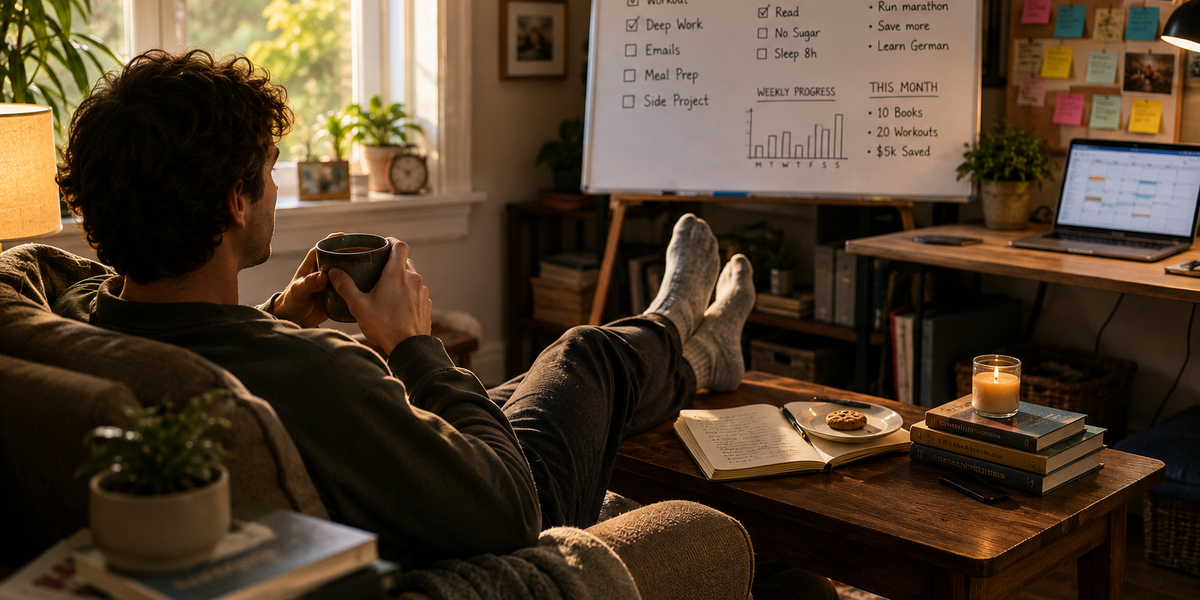

There is probably a better way to do almost everything.
You can optimize your morning routine, track your sleep, improve your workouts, automate your finances, batch your cooking, organize your inbox, measure your productivity, and listen to books at twice the speed. There are apps, systems, experts, and entire industries dedicated to helping you squeeze slightly more value from every hour.
Much of this is genuinely useful. Nobody needs to spend three hours on something that technology can handle in ten minutes.
The problem begins when optimization stops being a tool and becomes the way we approach life itself.
When every activity needs to be faster, more productive, or measurable, we can accidentally remove the parts that made it worth doing in the first place.
The promise of optimization is simple: save time now so you have more of it later.
Yet something strange often happens to the time we save. We fill it.
Answering emails becomes faster, so we answer more emails. Technology shortens household tasks, but our standards for what should be accomplished in a day increase. Productivity tools help us organize more projects, so we take on more projects.
Efficiency does not automatically produce leisure.
Without boundaries, it simply increases capacity.
You finish something 30 minutes earlier and immediately think about what else you could accomplish during those 30 minutes.
The problem is not efficiency itself. It is the assumption that saved time must always be reinvested in additional productivity.
Sometimes the best use of an hour you saved is nothing at all.
Tracking can be incredibly helpful. Budgets reveal where money goes. Fitness data can show progress. Calendars keep life organized.
But measurement can quietly become the experience.
A walk stops being a walk and becomes 8,000 steps. Sleep becomes a score. Reading becomes a yearly book target. Exercise becomes calories burned.
Even relaxation can become another metric: Did you meditate enough? Get enough deep sleep? Complete your morning routine?
The number may provide useful information, but it cannot capture everything valuable about the experience.
A short walk with someone you love may be more meaningful than reaching a daily step target alone. Reading one extraordinary novel slowly can offer more than racing through ten books to maintain a streak.
Not everything that counts needs to be counted.
The modern internet is very good at showing us how hobbies could become more productive.
Enjoy baking? You could sell cakes.
Like taking photographs? Build a portfolio.
Love reading? Start reviewing books online.
Know something useful? Create a course.
There is nothing wrong with earning money from something you enjoy. Many great careers begin exactly this way.
But hobbies also serve another purpose: they give us somewhere to be amateurs.
When every interest becomes a potential side hustle, we lose spaces where performance does not matter.
You are allowed to paint badly. You can run without training for a race. You can cook complicated food without photographing it or trying to become better at cooking every week.
Enjoyment is already a sufficient return on your time.
Perhaps the strangest consequence of productivity culture is that even rest can start feeling like something we should do correctly.
We schedule recovery so we can perform better tomorrow. We optimize sleep to improve concentration. We take breaks because research says breaks increase productivity.
All of those things may be true.
But rest does not need to justify itself by making you more productive afterward.
Sometimes you are allowed to be tired and stop.
An afternoon spent lying on the sofa watching something silly does not need to become “intentional recovery.” A slow Sunday does not require a wellness routine.
When rest always needs a productive purpose, it stops being completely restful.
Efficiency asks a useful question: how can this be done with less time or effort?
But that is not the only question worth asking.
Cooking dinner takes longer than ordering it, but the process might be enjoyable. Walking takes longer than driving, but you may notice more. A handwritten card is wildly inefficient compared with a text message, which is precisely why receiving one can feel special.
Many meaningful experiences contain unnecessary steps.
Rituals are often inefficient. So are celebrations, long conversations, elaborate meals, hobbies, travel, and relationships.
Removing every unnecessary step may make an activity faster while also removing much of its texture.
Sometimes the inconvenience is part of what makes something memorable.
Optimization depends on identifying gaps.
Your routine could be better. Your finances could be stronger. Your home could be more organized. Your body could be fitter. Your work could be more efficient.
There will always be something to improve.
That can be motivating, but it can also create a life where the present constantly feels like an unfinished version of the future.
You stop appreciating the routine because you are redesigning it. You stop noticing progress because you have already moved the target.
Improvement is useful when something is genuinely not working.
It becomes exhausting when nothing is ever allowed to be good enough.
A completely optimized schedule leaves very little room for anything unexpected.
If every hour has a purpose, an unplanned conversation becomes an interruption. A spontaneous invitation becomes inconvenient. Sitting somewhere longer than expected creates a problem for the rest of the day.
Some of life’s best experiences require time that was not already assigned a job.
You need space to take the longer route, stay for another coffee, wander into a shop, call someone unexpectedly, or change your plans because the weather is beautiful.
Spontaneity is difficult to schedule.
You can only leave room for it.
Relationships are inefficient by nature.
Children do not always move according to schedules. Friends occasionally need two-hour conversations when you had planned for 20 minutes. Partners have inconvenient emotions. Older relatives may tell stories you have heard before.
Trying to optimize every interaction can make relationships feel transactional.
People need time that does not immediately produce anything.
Often, the conversations that matter begin after the efficient part is over—after the meeting ends, after dinner is finished, after someone says they should probably leave but stays another half hour.
Human connection rarely operates at maximum efficiency.
Thankfully.
The answer is not to reject productivity.
Automate the boring administrative task. Use the faster route when you are late. Create systems that reduce unnecessary stress. Let technology handle repetitive work.
Optimization is brilliant when it removes things you do not value.
Be more careful when it begins removing time from things you do.
You do not need to maximize every morning, monetize every hobby, track every habit, or transform every spare hour into an opportunity for improvement.
Some parts of life should remain wonderfully inefficient.
Take the long lunch. Read the book slowly. Spend too much time talking after dinner. Do something you are mediocre at simply because you enjoy it.
A perfectly optimized life might contain fewer wasted minutes.
But wasted minutes, it turns out, are sometimes where life happens.

Attention rarely feels important while we are giving it away. We glance at a notification during dinner. We half-listen to someone while thinking about what we need to do next. We watch a film while checking our phones, walk through familiar streets without noticing them, and finish entire days unable to remember much of what actually happened.

We have become very good at recognizing lives that look interesting. They involve constant travel, impressive jobs, beautiful homes, busy social calendars, ambitious projects, expensive restaurants, dramatic announcements, and enough photographs to prove all of it happened. Online, an interesting life can start to resemble a continuous highlight reel.
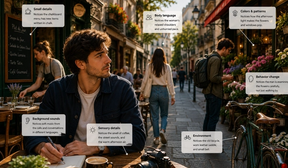
Some people seem to move through the world with a different level of resolution. They notice when someone has changed their hair slightly. They remember the name of the waiter from a restaurant they visited months ago. They spot an unusual building on a street everyone else has walked down a hundred times. They can tell when a friend’s mood has shifted before the friend says anything.

Sometimes you arrive somewhere completely unfamiliar and feel strangely at ease. You do not know the streets. You have no memories attached to the buildings. You may not even speak the language. Yet within a few hours, something about the place feels comfortable. You can imagine having a favorite café there, knowing which market to visit on Saturday, or walking the same route home every evening.

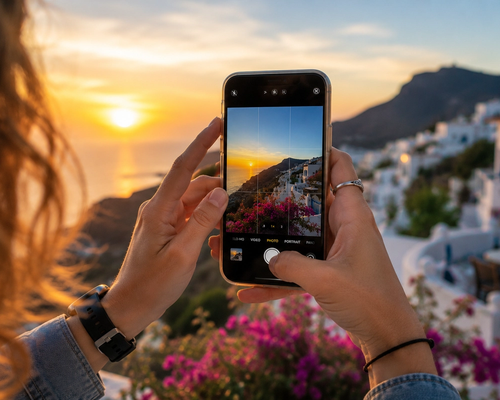
You do not need an expensive camera to take photographs worth keeping. The phone already in your pocket is capable of producing remarkably good images—and, more importantly, it is probably the camera you actually have with you when something worth photographing happens.

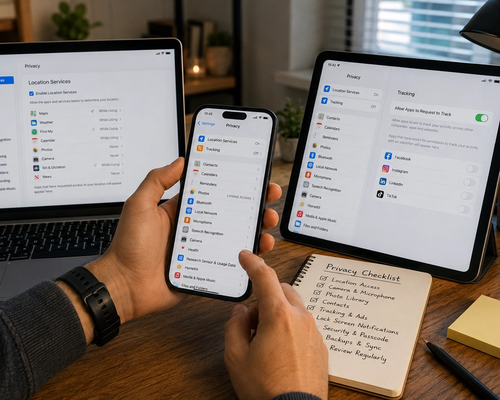
The internet is not something most of us can—or particularly want to—quit. We work online. We make plans through messages. We use maps, banking apps, calendars, news sites, music, podcasts, and group chats. Our phones contain genuinely useful tools alongside the apps that somehow turn five spare minutes into 45.