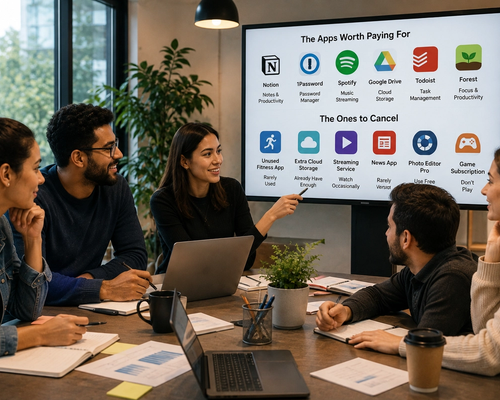
The Apps Worth Paying For (And the Ones to Cancel)
H
Hassan Keith


Subscriptions have made spending money strangely invisible.
A few dollars for extra cloud storage. Another monthly fee for music. A premium productivity app. A streaming service you joined for one show. Before long, your bank statement contains a small collection of recurring charges for apps you barely remember subscribing to.
That does not mean paid apps are a waste of money. Some are among the most useful purchases we make. The difference is whether you are paying for something that consistently improves your life or simply allowing another subscription to renew because canceling it has never felt urgent.
The best approach is not to cancel everything. It is to make each subscription earn its place.
Frequency is one of the simplest ways to judge whether an app is worth paying for.
If you use a service every morning, throughout your workday, or several evenings a week, even a relatively expensive subscription can offer good value.
Music streaming is an obvious example for many people. If you listen while commuting, exercising, cooking, working, and traveling, the cost per use becomes tiny.
The same can apply to cloud storage, password managers, language-learning tools, meditation apps, or professional software.
Do not judge the subscription only by its monthly price.
Ask how frequently it improves something you already do.
An app you happily use 25 days a month may be a better purchase than a cheaper subscription you open twice.
Plenty of free apps are perfectly adequate.
There is no reason to upgrade simply because a premium version exists.
But sometimes paying removes a recurring annoyance or unlocks a feature that meaningfully changes the experience.
Maybe the free version contains constant advertising. Perhaps you need offline access while traveling. Maybe premium features save you significant time at work.
The key word is genuinely.
Companies are very good at making premium features look essential. Before subscribing, use the free version long enough to identify what you personally find limiting.
If you cannot name the problem the paid version solves, you probably do not need it.
An app that helps you earn money should be judged differently from an entertainment subscription.
If software saves you two hours of repetitive work every month, its subscription may easily pay for itself.
Think about time as well as money.
Writing tools, design software, accounting apps, project-management platforms, scheduling tools, and specialized professional services can be expensive. But the relevant question is whether they improve the quality, speed, or organization of your work enough to justify the cost.
Be equally willing to cancel professional subscriptions you no longer use.
Businesses are especially vulnerable to subscription creep because tools are often added for specific projects and quietly remain afterward.
You probably do not need four apps doing roughly the same thing.
This happens easily with productivity tools in particular.
You have one app for notes, another for tasks, another for project planning, another for habits, and a fifth because somebody online promised it would finally organize your life.
At some point, managing the systems becomes its own task.
Choose the tool you actually use and cancel the experiments that never became habits.
The same principle applies to photo editing, fitness, meditation, cloud storage, news, and entertainment.
More options do not necessarily create more value.
Sometimes they simply create more passwords and monthly charges.
Streaming subscriptions are individually affordable and collectively impressive.
One service has the show you love. Another has the film everyone is discussing. A third came free for three months, and now you cannot remember when the free period ended.
You do not need to subscribe to everything simultaneously.
Keep one or two services you regularly use, then rotate others.
Subscribe for a month, watch what interests you, cancel, and return later when something new arrives.
Your watchlist will survive.
This approach can significantly reduce subscription spending without actually reducing how much entertainment you have access to.
Some subscriptions belong to the person you imagine becoming rather than the person you currently are.
You pay for the workout app because you are going to exercise every morning. You keep the language subscription because this is definitely the month you restart Spanish. You subscribe to several newspapers despite rarely reading beyond headlines.
There is nothing wrong with having ambitions.
But paying monthly for them does not make them more likely to happen.
Look at actual usage.
If you have not opened the app in two months, cancel it. You can always subscribe again when the habit returns.
Cancellation is not admitting defeat.
It is simply refusing to pay rent for an intention.
Annual plans can offer excellent savings when you already know you love a service.
They can also turn a small forgotten subscription into a surprisingly large charge.
Before choosing an annual plan, ask whether you have already used the app consistently for several months.
If you discovered it yesterday, the discounted yearly price may not actually save you anything.
Pay particular attention to free trials that automatically convert into annual subscriptions.
When starting a trial, immediately note the renewal date in your calendar if you are unsure whether you will keep it.
Future you will appreciate the warning.
You do not need to obsess over every small recurring payment each month.
Instead, schedule an occasional audit.
Open your app-store subscriptions and bank statement and look for recurring digital charges.
For each one, ask three questions: Do I use it? Does it improve my life? Would I subscribe again today?
That final question is particularly useful.
A service can remain active for years simply because doing nothing is easier than canceling. But if you would not actively choose to buy it again, there is little reason to keep paying.
Cancel first.
You can always return.
The goal of a subscription audit is not to reduce your monthly app spending to zero.
Paying for software that saves time, protects your data, teaches you something, entertains you constantly, or supports work you care about can be money well spent.
What deserves scrutiny is the invisible middle: apps you do not dislike enough to cancel but do not value enough to notice.
Those subscriptions survive because they are forgotten.
Keep the services you would miss tomorrow if they disappeared. Cancel the ones you forgot you had.
Your phone will work just fine with fewer subscriptions.
And your bank account probably will too.

Attention rarely feels important while we are giving it away. We glance at a notification during dinner. We half-listen to someone while thinking about what we need to do next. We watch a film while checking our phones, walk through familiar streets without noticing them, and finish entire days unable to remember much of what actually happened.

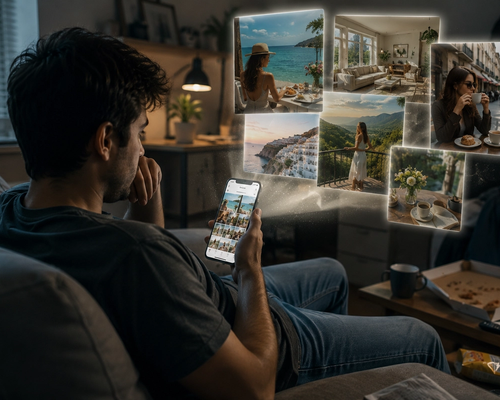
We have become very good at recognizing lives that look interesting. They involve constant travel, impressive jobs, beautiful homes, busy social calendars, ambitious projects, expensive restaurants, dramatic announcements, and enough photographs to prove all of it happened. Online, an interesting life can start to resemble a continuous highlight reel.
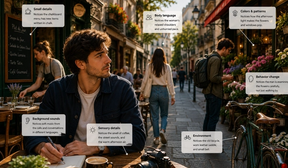
Some people seem to move through the world with a different level of resolution. They notice when someone has changed their hair slightly. They remember the name of the waiter from a restaurant they visited months ago. They spot an unusual building on a street everyone else has walked down a hundred times. They can tell when a friend’s mood has shifted before the friend says anything.

Sometimes you arrive somewhere completely unfamiliar and feel strangely at ease. You do not know the streets. You have no memories attached to the buildings. You may not even speak the language. Yet within a few hours, something about the place feels comfortable. You can imagine having a favorite café there, knowing which market to visit on Saturday, or walking the same route home every evening.

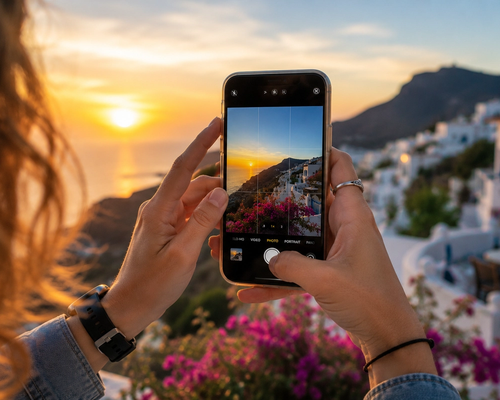
You do not need an expensive camera to take photographs worth keeping. The phone already in your pocket is capable of producing remarkably good images—and, more importantly, it is probably the camera you actually have with you when something worth photographing happens.

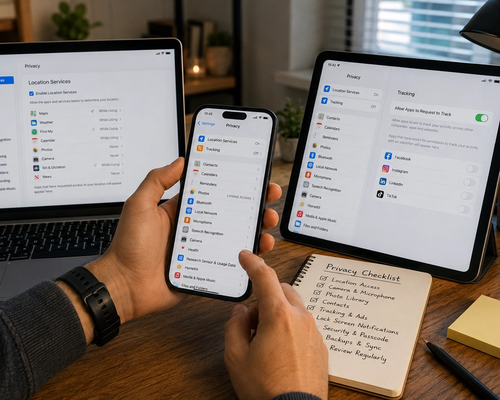
The internet is not something most of us can—or particularly want to—quit. We work online. We make plans through messages. We use maps, banking apps, calendars, news sites, music, podcasts, and group chats. Our phones contain genuinely useful tools alongside the apps that somehow turn five spare minutes into 45.