Why We Romanticize the Lives of Strangers Online
A
Allan Combs
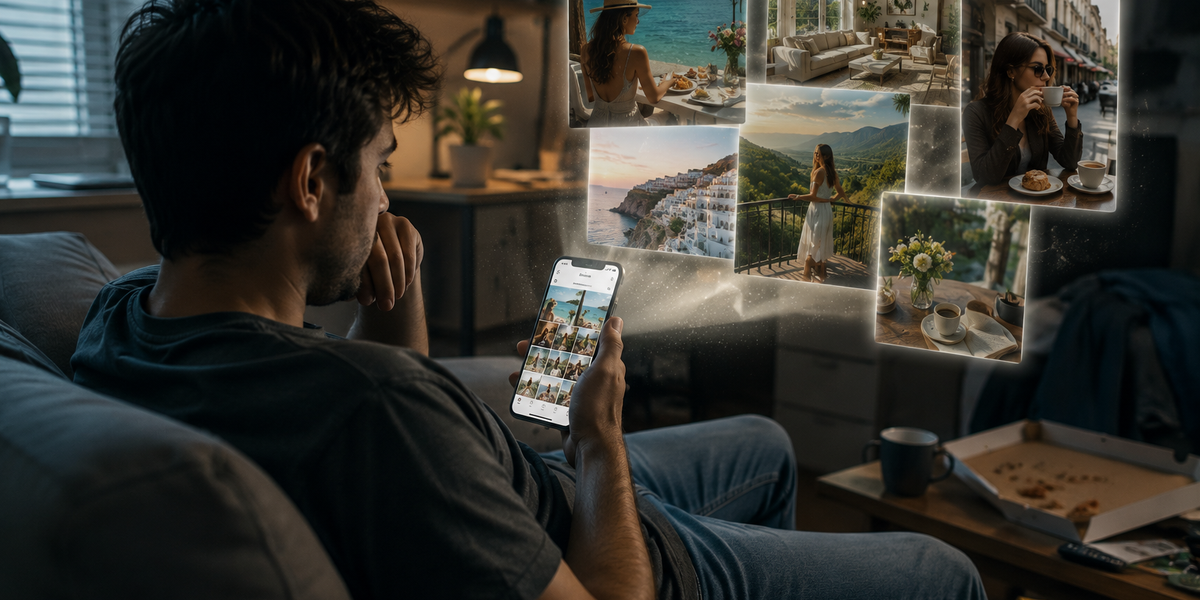

You see a woman making coffee in a sunlit kitchen. Someone else is walking through Copenhagen in a perfect coat. A family appears to spend every weekend eating homemade lunches in the countryside. Another person seems to work remotely from beautiful hotels while somehow never answering an email.
You know, logically, that you are seeing fragments. Still, a small part of your brain decides: Their life is better than mine.
Social media has given us extraordinary access to the everyday lives of people we have never met. But we are not actually seeing their everyday lives. We are seeing selected moments, and our minds are remarkably good at constructing everything missing between them.
That is where romanticizing begins.
A beautiful photograph contains surprisingly little information.
You can see the apartment, but not the rent. You can see the holiday, but not the argument that happened that morning. You can see someone’s career announcement, but not the months of uncertainty before it.
When information is missing, our minds naturally complete the story.
The problem is that we tend to fill those gaps generously when looking at other people’s lives. The person with the beautiful apartment must also have a peaceful morning routine. The couple traveling through Italy must have a wonderful relationship. The successful entrepreneur probably wakes up excited about work every day.
We create a complete life from a handful of attractive details.
Meanwhile, we experience our own lives in unedited form: bills, dishes, awkward conversations, bad moods, boring afternoons and all.
It is an unfair comparison from the beginning.
Social media rewards recognizable aesthetics.
Someone’s feed might contain neutral interiors, morning coffee, linen shirts, books, flowers, and quiet weekend trips. Another person’s content revolves around fitness, early mornings, meal preparation, and productivity.
When every image communicates the same mood, we start assuming the person’s life feels that consistent too.
It probably does not.
A visually calm home can contain stressed people. Someone with beautiful travel photos can hate airports. A person posting elaborate breakfasts can eat cereal over the sink the following morning.
Aesthetic consistency is often a creative choice, not evidence of emotional consistency.
But the human brain loves patterns, so we turn a carefully maintained visual identity into a personality and then into an entire imagined life.
It is much harder to romanticize people you know intimately.
You know your best friend’s insecurities. You have seen your partner irritated. You know your sibling’s annoying habits. Familiarity provides context.
Strangers online do not come with that context.
You might know someone’s favorite coffee shop, skincare routine, apartment layout, and holiday destinations without knowing how they behave when they are tired, whether they worry about money, or what their relationships actually feel like.
That distance leaves enormous room for projection.
Sometimes we are not even admiring the stranger themselves. We are using them as a screen onto which we project a life we currently want.
Their countryside house represents peace. Their career represents freedom. Their wardrobe represents confidence. Their relationship represents security.
The person becomes a symbol.
Ordinary life is repetitive.
Most days contain some combination of getting ready, working, cleaning, eating, commuting, caring for people, answering messages, and going to sleep.
That does not necessarily make compelling content.
Social platforms naturally elevate moments that capture attention: transformations, beautiful destinations, exciting purchases, impressive achievements, romantic gestures, perfect meals, and dramatic announcements.
Scroll for long enough and you can consume hundreds of people’s highlights in a single sitting.
Your brain then receives a distorted impression of how frequently exciting things happen in everyone else’s lives.
Your Tuesday afternoon is being compared with someone’s wedding, someone else’s holiday, another person’s promotion, and a fourth person’s renovated kitchen.
No ordinary day is going to win that competition.
If someone frequently posts restaurant meals, we may assume they are always eating out. If they regularly post trips, we imagine constant travel.
But ten beautiful travel posts could have come from one four-day trip.
Content stretches moments.
A creator can photograph several outfits in one afternoon and publish them over weeks. Someone can turn one beautiful weekend into enough material to fill a month.
As viewers, we encounter those moments separately and unconsciously interpret them as evidence of a continuous lifestyle.
This is one reason someone else’s life can appear much fuller than our own. We are comparing their accumulated highlights with our experience of real time.
There is nothing inherently wrong with finding other people’s lives inspiring.
Seeing someone’s reading habit might encourage you to read more. A beautiful home might inspire you to change your own space. Travel content can introduce you to somewhere you genuinely want to visit.
Sometimes romanticizing another person’s life reveals something useful about your own desires.
The question is what exactly you are responding to.
Instead of thinking, “I want her life,” ask what part of it appeals to you.
Maybe you want slower mornings. More travel. Better clothes. Creative work. A quieter home. More dinners with friends.
Those are concrete desires you can actually examine.
Wanting another person’s entire imagined existence is much harder to do anything with.
It is easy to forget that your life can also look beautiful in fragments.
Someone else would not see the argument before your dinner reservation. They would see the candlelit table. They would not see the stressful morning before your walk. They would see the trees and coffee afterward.
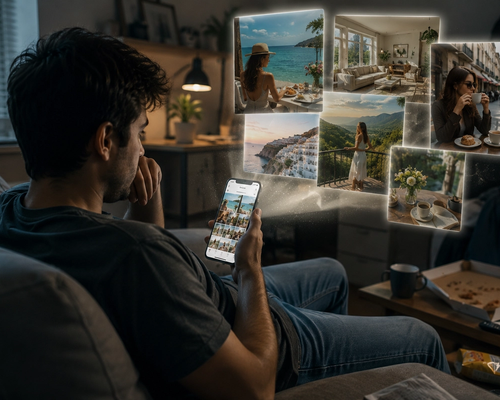
Your camera roll probably contains evidence of a much more romantic life than the one you feel you are living.
That does not mean your problems are imaginary. It simply means beauty and difficulty routinely exist in the same life.
The strangers you follow online are almost certainly experiencing the same contradiction.
Their lives contain boring days, uncertainty, embarrassment, laundry, disappointments, insecurities, and moments that would never make the feed.
You just do not see them.
And somewhere, someone may be looking at one carefully framed moment from your perfectly ordinary life and imagining that you have figured out everything they have not.

Attention rarely feels important while we are giving it away. We glance at a notification during dinner. We half-listen to someone while thinking about what we need to do next. We watch a film while checking our phones, walk through familiar streets without noticing them, and finish entire days unable to remember much of what actually happened.

We have become very good at recognizing lives that look interesting. They involve constant travel, impressive jobs, beautiful homes, busy social calendars, ambitious projects, expensive restaurants, dramatic announcements, and enough photographs to prove all of it happened. Online, an interesting life can start to resemble a continuous highlight reel.
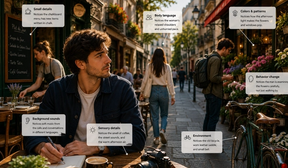
Some people seem to move through the world with a different level of resolution. They notice when someone has changed their hair slightly. They remember the name of the waiter from a restaurant they visited months ago. They spot an unusual building on a street everyone else has walked down a hundred times. They can tell when a friend’s mood has shifted before the friend says anything.
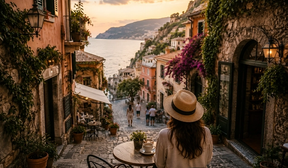
Sometimes you arrive somewhere completely unfamiliar and feel strangely at ease. You do not know the streets. You have no memories attached to the buildings. You may not even speak the language. Yet within a few hours, something about the place feels comfortable. You can imagine having a favorite café there, knowing which market to visit on Saturday, or walking the same route home every evening.
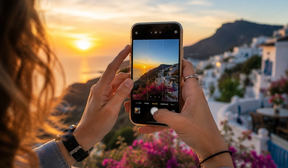
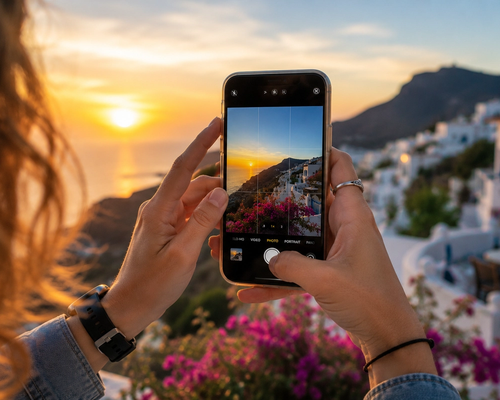
You do not need an expensive camera to take photographs worth keeping. The phone already in your pocket is capable of producing remarkably good images—and, more importantly, it is probably the camera you actually have with you when something worth photographing happens.

The internet is not something most of us can—or particularly want to—quit. We work online. We make plans through messages. We use maps, banking apps, calendars, news sites, music, podcasts, and group chats. Our phones contain genuinely useful tools alongside the apps that somehow turn five spare minutes into 45.