The Cultural Power of Paying Attention
H
Hassan Keith


Attention has become one of the most valuable things we possess, largely because so many things are competing for it.
A notification appears while you are reading. A video plays while you are eating. You reach for your phone during the quietest ten seconds of a conversation. Even entertainment increasingly comes with a second screen in our hands.
None of this feels particularly dramatic. That is exactly why it matters.
What we repeatedly pay attention to shapes what becomes popular, profitable, culturally important, and personally memorable. Attention is not simply something we have. It is something we give away, often hundreds of times a day.
And increasingly, choosing where to place it is an act of cultural power.
Much of the modern internet runs on a simple principle: keep people looking.
The longer we watch, scroll, click, listen, or engage, the more valuable our attention becomes. Platforms compete for minutes and seconds because those minutes and seconds can eventually be converted into advertising revenue, subscriptions, purchases, or influence.
This changes what gets created.
A headline needs to make you click. A video needs to stop your scroll. A television episode needs to keep you from switching to something else. Even individuals increasingly think about whether something is “engaging” before deciding whether it is worth publishing.
Attention has always mattered in culture, of course. Newspapers wanted readers. Television networks wanted viewers. Advertisers wanted consumers.
What has changed is the precision and intensity of the competition.
There is always something else waiting one swipe away.
Culture is partly built from collective attention.
A song becomes unavoidable because millions of people play it. A phrase moves from one corner of the internet into everyday conversation. A previously unknown person becomes famous because enough people decide to look in the same direction at once.
This can happen incredibly quickly.
The result is that attention does more than reflect cultural importance. It can create it.
Every view or share is tiny on its own, but collectively these actions determine which ideas, creators, scandals, aesthetics, and conversations dominate a particular moment.
That does not mean everyone needs to treat their social media activity as a serious civic responsibility. But it is worth remembering that repeatedly engaging with something—even because you dislike it—can help keep it visible.
Outrage is still attention.
When your brain becomes accustomed to rapid novelty, slower experiences can start feeling strangely difficult.
A long article feels demanding. A quiet film seems too slow. Reading 40 pages of a novel requires more effort than watching 40 short videos.
The slower thing has not necessarily become less interesting. Our expectations may have changed.
This matters because many valuable experiences require sustained attention before they become rewarding.
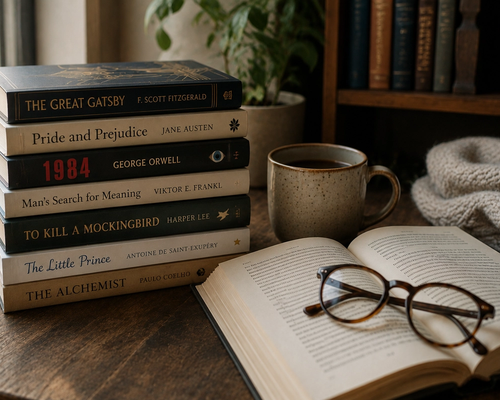
Books need time to build worlds. Conversations sometimes need silence before someone says what they actually mean. Music can reveal details after repeated listening. Complex ideas rarely fit perfectly into a few seconds.
If we lose patience with anything that does not immediately entertain us, we do not simply change our media habits. We narrow the kinds of experiences capable of reaching us.
Think about the last time someone gave you their complete attention.
They were not checking notifications while you spoke. They remembered something you had mentioned weeks earlier. They noticed when your mood changed.
It probably felt unusually good.
Attention communicates importance.
This is true in relationships, but also in communities and culture. Attending a small exhibition, reading an independent publication, listening carefully to a new musician, or buying a book from an unfamiliar writer gives something valuable to work that might otherwise disappear.
Money supports culture, but attention often comes first.
We cannot meaningfully pay attention to everything. Choosing what deserves our focus is therefore one way of deciding what we want more of.
There used to be more unavoidable empty space.
You waited for a bus. Stood in a queue. Sat in a waiting room. Walked somewhere without listening to anything.
Now those gaps can disappear almost instantly.
The moment nothing is happening, there is a device capable of providing entertainment.
That convenience is wonderful in many ways. But boredom also gave the mind room to wander.
Ideas arrive while walking. Memories surface in quiet moments. Problems sometimes solve themselves after we stop actively trying to solve them.
Not every empty minute needs to become productive. Sometimes leaving it empty is the point.
Being able to tolerate a little boredom may now be a surprisingly useful skill.
Paying attention does not only matter when consuming important books, films, journalism, or art.
It changes ordinary experiences too.
Food tastes different when you are not simultaneously scrolling. A walk becomes more interesting when you notice the buildings, weather, trees, and people around you. Conversations become deeper when you are not waiting for an opportunity to check your phone.
The world contains enormous amounts of detail that become invisible when our attention is permanently divided.
This does not require deleting every app or turning your phone into an enemy. Technology is useful, entertaining, and deeply integrated into modern life.
The goal is simply to occasionally choose attention rather than surrendering it automatically.
There is a famous idea that you become what you repeatedly consume. Perhaps it is more accurate to say that your world gradually becomes whatever you repeatedly notice.
Spend hours following outrage and the world can begin to feel permanently furious. Spend your attention on creativity, ideas, people, places, and experiences that genuinely interest you, and your mental landscape changes.
This does not mean ignoring difficult realities. Paying attention can also mean looking directly at problems that are easier to avoid.
The important part is making the choice consciously.
Attention is finite. Every hour given to one thing is an hour unavailable to thousands of others.
That makes paying attention more than a personal habit. It is a quiet vote for what deserves to occupy space—in our minds, our conversations, and ultimately our culture.
In a world designed to constantly ask, “Look at this,” perhaps one of the most powerful questions we can ask ourselves is much simpler:
Is this actually worth my attention?

Attention rarely feels important while we are giving it away. We glance at a notification during dinner. We half-listen to someone while thinking about what we need to do next. We watch a film while checking our phones, walk through familiar streets without noticing them, and finish entire days unable to remember much of what actually happened.

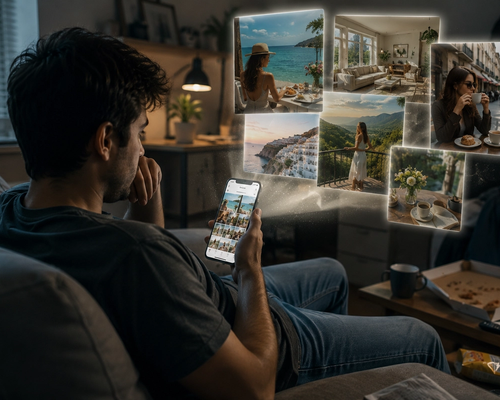
We have become very good at recognizing lives that look interesting. They involve constant travel, impressive jobs, beautiful homes, busy social calendars, ambitious projects, expensive restaurants, dramatic announcements, and enough photographs to prove all of it happened. Online, an interesting life can start to resemble a continuous highlight reel.
Some people seem to move through the world with a different level of resolution. They notice when someone has changed their hair slightly. They remember the name of the waiter from a restaurant they visited months ago. They spot an unusual building on a street everyone else has walked down a hundred times. They can tell when a friend’s mood has shifted before the friend says anything.

Sometimes you arrive somewhere completely unfamiliar and feel strangely at ease. You do not know the streets. You have no memories attached to the buildings. You may not even speak the language. Yet within a few hours, something about the place feels comfortable. You can imagine having a favorite café there, knowing which market to visit on Saturday, or walking the same route home every evening.
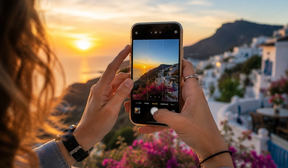
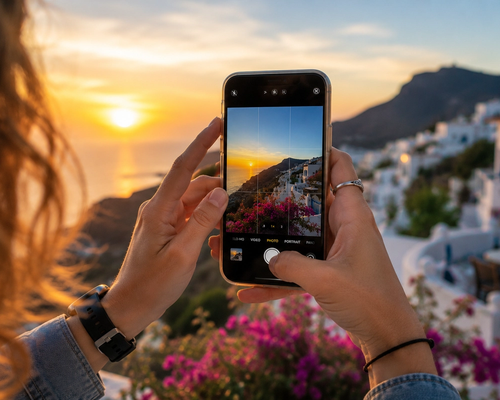
You do not need an expensive camera to take photographs worth keeping. The phone already in your pocket is capable of producing remarkably good images—and, more importantly, it is probably the camera you actually have with you when something worth photographing happens.

The internet is not something most of us can—or particularly want to—quit. We work online. We make plans through messages. We use maps, banking apps, calendars, news sites, music, podcasts, and group chats. Our phones contain genuinely useful tools alongside the apps that somehow turn five spare minutes into 45.