The Quiet Power of Paying Attention
D
Dylan Rollins


Attention rarely feels important while we are giving it away.
We glance at a notification during dinner. We half-listen to someone while thinking about what we need to do next. We watch a film while checking our phones, walk through familiar streets without noticing them, and finish entire days unable to remember much of what actually happened.
None of these moments seems particularly significant on its own. But together, they shape the texture of our lives.
What we pay attention to becomes what we experience. And in a world built to constantly compete for our focus, choosing where that attention goes has become a quiet kind of power.
Two people can walk down the same street and experience completely different places. One notices the architecture, the smell coming from a bakery, the changing light, and a conversation happening at a nearby table. The other arrives at the destination without remembering much of the walk at all.
The difference is attention.
Our lives contain far more detail than we can consciously process, so the mind is constantly deciding what deserves to be noticed. Over time, those choices influence what the world feels like.
If your attention is repeatedly directed toward bad news, arguments, problems, and comparison, life can begin to feel dominated by those things. If you also notice humor, beauty, kindness, interesting ideas, and ordinary pleasures, your experience becomes broader.
Paying attention does not mean pretending difficult things do not exist. It means remembering they are not the only things that do.
We tend to associate meaningful experiences with unusual events: vacations, celebrations, achievements, major milestones. Yet most of life happens between them.
It happens over breakfast. During the walk to work. While making dinner. In conversations that seem completely ordinary at the time.
Attention makes those moments more vivid.
Drink coffee while answering emails and you may barely notice it. Sit for five minutes and actually taste it, and the same cup becomes a small experience. Walk somewhere without headphones occasionally and you begin hearing a neighborhood you normally move through on autopilot.
Nothing about the external world changed.
You simply arrived for it.
Think about how it feels when someone truly listens to you.
They do not look at their phone halfway through your sentence. They ask a question based on something you said rather than waiting for their turn to speak. Weeks later, they remember a small detail you had forgotten mentioning.
Attention makes people feel significant.
This is particularly important because divided attention has become normal. We can technically be with someone while simultaneously responding to messages, reading notifications, and thinking about something happening elsewhere.
Being physically present is easy. Being mentally present requires more effort.
Sometimes the most generous thing you can give another person is simply the feeling that, for the next few minutes, you are not trying to be anywhere else.
Modern life offers very few unavoidable moments of boredom.
Waiting in line used to mean waiting in line. Now it can mean watching videos, reading news, answering messages, checking email, or scrolling through hundreds of photographs of people you barely know.
There is always something available to occupy the mind.
That convenience is useful, but it can also make sustained attention feel increasingly uncomfortable. A long article feels difficult. A slow film seems boring. A conversation reaches a quiet moment and someone instinctively reaches for a phone.
The ability to concentrate is not something we either possess or do not. It responds to how we use it.
If we constantly switch between stimuli, switching becomes familiar. Spending time with one thing can begin to feel unusually demanding.
Rebuilding attention often starts with allowing fewer interruptions.
There is a strange paradox in adult life: the days can feel long while the years seem to disappear.
Part of that feeling may come from repetition and autopilot. When days contain similar routines and we barely notice their details, fewer moments stand out clearly in memory.
Attention creates landmarks.
You remember the afternoon because the light was beautiful. You remember dinner because everyone stayed at the table talking. You remember the walk because you took a different route and noticed something you had never seen before.
You cannot make time move more slowly.
But you can make more of it noticeable.
A life filled with attention often feels fuller because more of it becomes available to memory.
People who seem deeply interested in life are not necessarily surrounded by more interesting things.
They are often simply curious.
They ask questions. They notice details. They wonder why something works the way it does. They listen when someone knows something they do not.
Curiosity turns attention outward.
Instead of moving through the world constantly asking whether something is entertaining enough, you begin asking what might be interesting about it.
A building becomes architecture. A meal becomes history and culture. A conversation with an older relative becomes a collection of stories you may someday wish you had asked about sooner.
The world becomes more interesting when you participate in noticing it.
There is an exhausting version of mindfulness advice that makes ordinary distraction feel like personal failure.
Minds wander. People daydream. Sometimes you will scroll while watching television, eat lunch while answering emails, or realize you have not heard the last three minutes of a conversation.
That is normal.
Paying attention does not require monitoring every moment of your consciousness. It simply means creating more occasions when you deliberately choose to be where you are.
Put your phone away for one meal. Listen to an entire song without doing anything else. Look out the window during the train ride. Let someone finish speaking before deciding what you want to say.
Small moments of attention accumulate.
We often think the quality of life depends mainly on what happens to us: where we live, what we achieve, where we travel, what we own, and which milestones we reach.
Those things matter.
But life is also made from what we notice while all of it is happening.
The conversation you almost missed. The expression on someone’s face. The ordinary Tuesday evening that will someday belong to a completely different chapter of your life.
Attention cannot make every moment extraordinary.
It can do something more useful.
It can keep ordinary moments from disappearing unnoticed.
And perhaps that is its quietest power: reminding us that much of what makes a life meaningful is already happening.

Attention rarely feels important while we are giving it away. We glance at a notification during dinner. We half-listen to someone while thinking about what we need to do next. We watch a film while checking our phones, walk through familiar streets without noticing them, and finish entire days unable to remember much of what actually happened.

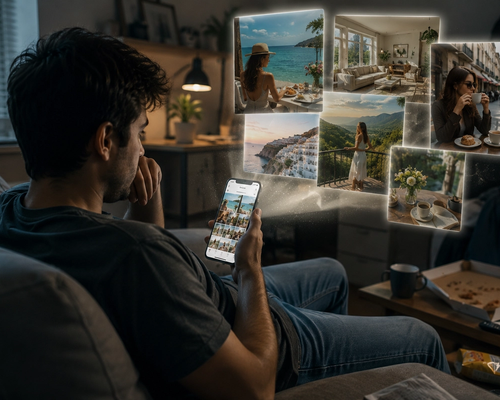
We have become very good at recognizing lives that look interesting. They involve constant travel, impressive jobs, beautiful homes, busy social calendars, ambitious projects, expensive restaurants, dramatic announcements, and enough photographs to prove all of it happened. Online, an interesting life can start to resemble a continuous highlight reel.
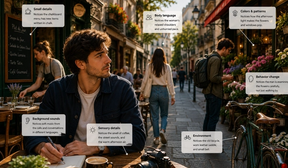
Some people seem to move through the world with a different level of resolution. They notice when someone has changed their hair slightly. They remember the name of the waiter from a restaurant they visited months ago. They spot an unusual building on a street everyone else has walked down a hundred times. They can tell when a friend’s mood has shifted before the friend says anything.

Sometimes you arrive somewhere completely unfamiliar and feel strangely at ease. You do not know the streets. You have no memories attached to the buildings. You may not even speak the language. Yet within a few hours, something about the place feels comfortable. You can imagine having a favorite café there, knowing which market to visit on Saturday, or walking the same route home every evening.

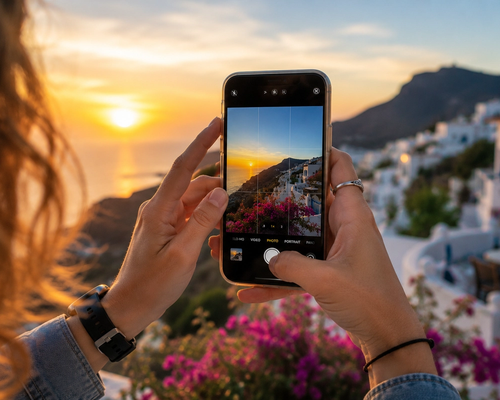
You do not need an expensive camera to take photographs worth keeping. The phone already in your pocket is capable of producing remarkably good images—and, more importantly, it is probably the camera you actually have with you when something worth photographing happens.

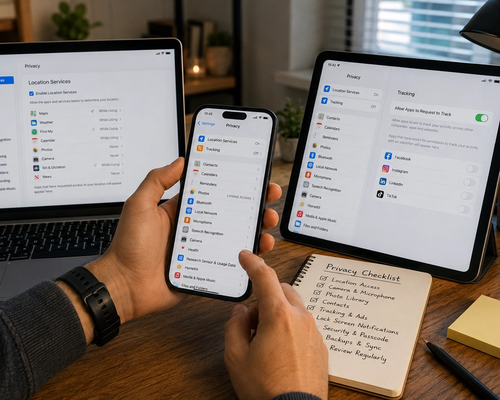
The internet is not something most of us can—or particularly want to—quit. We work online. We make plans through messages. We use maps, banking apps, calendars, news sites, music, podcasts, and group chats. Our phones contain genuinely useful tools alongside the apps that somehow turn five spare minutes into 45.