Why the Most Interesting Lives Are Rarely Loud
A
Allan Combs


We have become very good at recognizing lives that look interesting.
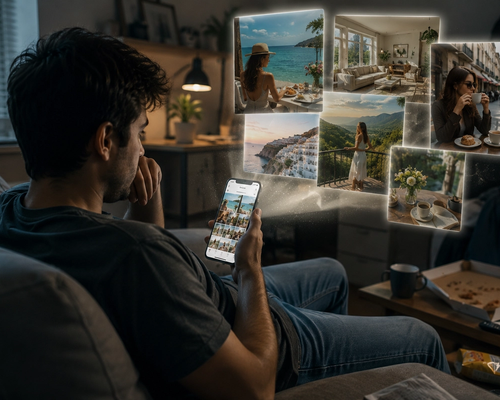
They involve constant travel, impressive jobs, beautiful homes, busy social calendars, ambitious projects, expensive restaurants, dramatic announcements, and enough photographs to prove all of it happened. Online, an interesting life can start to resemble a continuous highlight reel.
But some of the most interesting people live much more quietly.
Their lives may not produce impressive weekly recaps. They might spend years becoming unusually good at something, maintain friendships nobody else sees, read widely, make things without selling them, travel without documenting every hour, or know an extraordinary amount about subjects that have never appeared on a trending page.
Interesting lives are not necessarily loud because depth rarely needs an audience.
Modern culture often confuses visibility with significance.
The people we see most frequently begin to feel important simply because they occupy so much attention. Their opinions appear repeatedly. Their homes become familiar. We know where they vacation, what they wear, and sometimes what they ate for breakfast.
But visibility tells us very little about the richness of someone’s actual life.
A person can share constantly and reveal surprisingly little. Another can rarely post anything and have an inner world filled with ideas, relationships, experiences, skills, and stories.
The difference is easy to forget because quiet lives leave less evidence.
They are lived rather than broadcast.
One of the most reliable qualities of genuinely interesting people is that they are curious.
They ask questions. They notice details. They want to understand how things work and why people think differently from them. They can become fascinated by architecture, family history, birds, politics, ceramics, old films, gardening, languages, food, or almost anything else.
Their curiosity gives them something to talk about beyond themselves.
That matters.
Someone who has traveled to 50 countries is not automatically interesting if every story eventually becomes a list of hotels and landmarks. Someone who has barely traveled might be fascinating because they pay extraordinary attention to the world around them.
Interestingness has less to do with accumulating experiences than with being awake to them.
Many worthwhile things happen slowly.
Learning a language takes years. Building a close friendship takes repeated conversations. Becoming excellent at a craft involves doing the same thing thousands of times when nobody is watching.
None of this produces constant novelty.
From the outside, it can even look repetitive.
The person practicing piano every evening may appear to be doing less than someone attending a different event every night. Ten years later, one of them can sit at a piano and make a room go silent.
Depth requires staying with things after the excitement of beginning has disappeared.
Quiet lives often provide enough space for that.
There is a strange moment that can happen during a beautiful experience: before fully registering what you are seeing, you begin thinking about how to capture it.
Which angle looks best? Should you post it now or later? Is this worth a story?
The experience has barely happened and it is already becoming content.
There is nothing wrong with sharing your life. Photographs preserve memories, and telling other people about good moments can extend the pleasure of them.
But some experiences become more intimate when they remain private.
A dinner nobody photographed. A weekend nobody knew about. A personal achievement celebrated by five people rather than five hundred.
Keeping something for yourself can give it a different kind of value.
Interesting lives are often associated with constant change.
New cities. New jobs. New relationships. New experiences.
But stability does not necessarily mean stagnation.
Someone can live in the same town for decades and continually change intellectually, creatively, and emotionally. They can develop deeper relationships with people and places precisely because they stayed long enough to see them evolve.
A person who knows every path through a nearby forest may notice more there than a visitor racing through five national parks.
Novelty is one way of experiencing life.
Familiarity is another.
When you stay with something long enough, you begin seeing details that newcomers miss.
There is freedom in having hobbies that do not need to become achievements.
Paint badly. Learn three songs on the guitar. Grow tomatoes that look ridiculous. Take photographs nobody will see. Join a class where you are clearly not the most talented person in the room.
The internet can make hobbies feel strangely professional. Almost anything you enjoy can become content, a side business, a personal brand, or something to optimize.
But curiosity grows when there is permission to be a beginner.
People with rich lives often have interests that exist for no reason beyond enjoyment.
They do not need to become excellent at everything they love.
A quieter life can look unimpressive according to conventional measurements.
Maybe someone earns enough rather than maximizing their income. Perhaps they choose a smaller home because they value free time. They turn down opportunities that would look impressive because those opportunities would make everyday life worse.
These choices can be difficult because they do not always produce obvious status.
There may be no announcement.
Yet knowing what you value—and organizing your life around it—is more interesting than automatically pursuing whatever receives the most applause.
A good life does not need to make sense as a résumé.
The most interesting lives are often built from ordinary things noticed properly.
A long conversation. A book that changes your mind. Cooking dinner with someone. Walking through a familiar neighborhood and noticing a building you have somehow ignored for years.
None of these experiences is inherently dramatic.
Attention gives them weight.
People who pay attention collect details, questions, memories, stories, and connections. They notice what other people say. They remember small things. They become interested in places rather than simply passing through them.
That creates richness without requiring constant excitement.
There will always be louder ways to live.
More places to go. More achievements to announce. More things to photograph. More ways to make your life visible to people who are not actually part of it.
But visibility is not the same thing as fullness.
A fascinating life might look remarkably ordinary from the outside. It can contain the same morning coffee, familiar people, repeated walks, unfinished books, private jokes, small trips, strange hobbies, and work nobody applauds.
What makes it interesting is not how impressive those things appear when listed.
It is how deeply they are experienced.
The richest lives are not always the ones everyone notices.
Sometimes they are the ones whose owners were too busy living them to make much noise.

Attention rarely feels important while we are giving it away. We glance at a notification during dinner. We half-listen to someone while thinking about what we need to do next. We watch a film while checking our phones, walk through familiar streets without noticing them, and finish entire days unable to remember much of what actually happened.

We have become very good at recognizing lives that look interesting. They involve constant travel, impressive jobs, beautiful homes, busy social calendars, ambitious projects, expensive restaurants, dramatic announcements, and enough photographs to prove all of it happened. Online, an interesting life can start to resemble a continuous highlight reel.
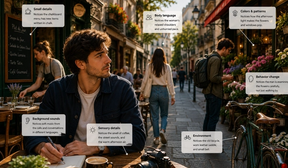
Some people seem to move through the world with a different level of resolution. They notice when someone has changed their hair slightly. They remember the name of the waiter from a restaurant they visited months ago. They spot an unusual building on a street everyone else has walked down a hundred times. They can tell when a friend’s mood has shifted before the friend says anything.
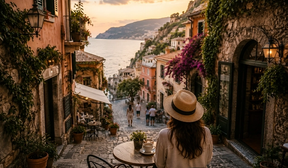
Sometimes you arrive somewhere completely unfamiliar and feel strangely at ease. You do not know the streets. You have no memories attached to the buildings. You may not even speak the language. Yet within a few hours, something about the place feels comfortable. You can imagine having a favorite café there, knowing which market to visit on Saturday, or walking the same route home every evening.
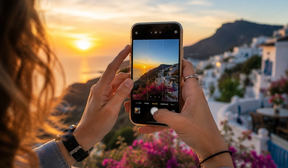
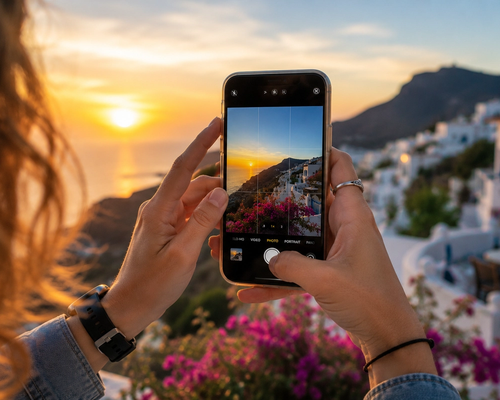
You do not need an expensive camera to take photographs worth keeping. The phone already in your pocket is capable of producing remarkably good images—and, more importantly, it is probably the camera you actually have with you when something worth photographing happens.

The internet is not something most of us can—or particularly want to—quit. We work online. We make plans through messages. We use maps, banking apps, calendars, news sites, music, podcasts, and group chats. Our phones contain genuinely useful tools alongside the apps that somehow turn five spare minutes into 45.