The Books Worth Reading Twice
D
Dylan Rollins
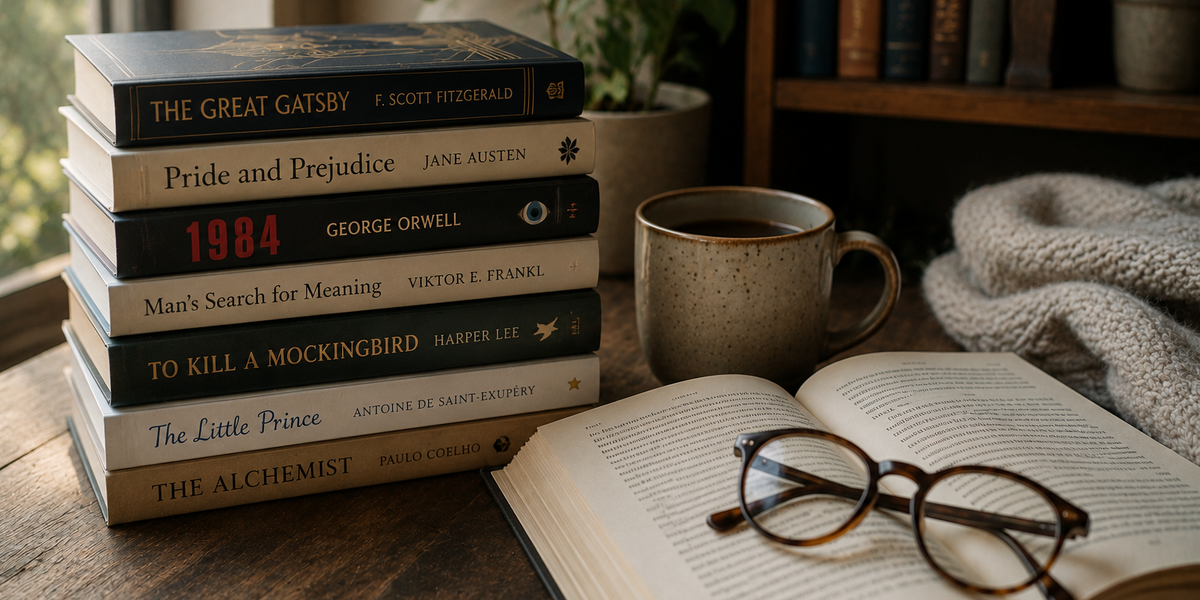

There are books you finish, enjoy, and place back on the shelf. Then there are books you keep thinking about months or years later. A sentence comes back to you during a conversation. A character makes more sense after something happens in your own life. Eventually, you pick the book up again and discover that it somehow feels different.
The best books to reread are not necessarily the most complicated or prestigious ones. They are books with enough depth to offer something new when the reader changes.
If your reading list is already impossibly long, rereading can feel like an indulgence. But some books are worth giving another few evenings of your life.
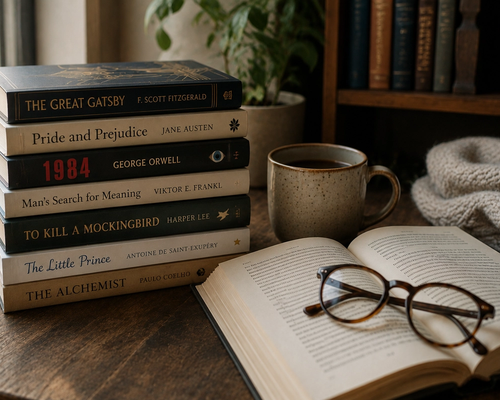
Most people encounter The Great Gatsby when they are relatively young, often in school. At that age, it can seem primarily like a story about wealth, parties, romance, and one man’s obsession with a woman from his past.
Read it later and the story can look very different.
Gatsby’s pursuit of Daisy becomes part of a larger obsession with reinvention and the belief that obtaining the right things can somehow repair the past. The extravagant parties feel lonelier. Nick becomes a more complicated narrator. Even the glamour surrounding Gatsby starts to look increasingly fragile.
It is also short enough that rereading never feels like a major commitment. What changes is less the novel than the person bringing another decade of experience to it.
The first time through, it is easy to focus almost entirely on Elizabeth Bennet and Mr. Darcy.
The second time, everyone else becomes much more interesting.
You notice how funny Mr. Collins actually is, how expertly Lady Catherine controls conversations, how differently each Bennet sister responds to the limited choices available to her, and how much social observation Austen manages to hide inside seemingly ordinary conversations.
Knowing where the romance ends also changes the reading experience. Instead of rushing toward the outcome, you can pay attention to how Elizabeth and Darcy repeatedly misunderstand each other—and themselves.
It becomes less a question of whether they will end up together and more a study of how people revise deeply held opinions.
1984 is often remembered through its biggest ideas: surveillance, propaganda, censorship, and authoritarian control.
Those ideas alone make it worth revisiting. But a second reading reveals how much of the novel is concerned with something even more fundamental: control over reality.
Language matters because language shapes what can be expressed. Memory matters because remembering something different from the official version becomes dangerous. Private relationships matter because they create loyalties beyond the state.
It is also a book whose relevance can shift depending on the world around the reader. Different political, technological, and cultural moments can bring different parts of Orwell’s novel into focus.
Some books are worth rereading because you notice more details. Others are worth rereading because the same ideas mean something different depending on what you are going through.
Man’s Search for Meaning belongs firmly in the second category.
Frankl combines his experiences as a concentration camp prisoner with ideas that would become central to logotherapy, particularly the human search for meaning.
Read during a relatively stable period, the book may feel philosophical. Return to it during grief, uncertainty, disappointment, or a major transition and certain observations can land very differently.
It is not a book that provides a neat formula for happiness. Its enduring value comes from its exploration of meaning under circumstances in which so much control has been taken away.
Many readers first encounter To Kill a Mockingbird through Scout’s childhood perspective. Her voice makes an enormously complicated world accessible.
Returning to the novel as an adult changes the balance.
You may pay more attention to Atticus, Calpurnia, Mayella Ewell, or the adults whose behavior Scout observes without fully understanding. Moments that seemed straightforward during an earlier reading become morally and socially more complicated.
Rereading also makes Scout’s limited understanding more noticeable. The reader can see realities she cannot yet fully interpret, creating a gap between what is happening and what she understands to be happening.
That gap is one of the reasons the novel rewards another reading later in life.
It looks like a children’s book. It reads like something else entirely when you return to it as an adult.
The Little Prince is filled with simple observations about friendship, loneliness, responsibility, love, and the strange priorities people develop as they grow older.
As a child, you may remember the planets, drawings, fox, and rose. As an adult, the melancholy underneath the story becomes much more visible.
Its simplicity is exactly what makes it rereadable. You can finish it quickly, but certain ideas have a habit of staying around far longer than the book itself.
The Alchemist is one of those books readers tend either to love or find too simple. Its straightforward style and fable-like structure are precisely what make it easy to revisit.
The story follows Santiago, a shepherd pursuing a dream that takes him far from the life he knows. Along the way, the novel explores ambition, fear, uncertainty, and what people are willing to risk for the possibility of something more.
At one stage of life, you may read it as encouragement to chase a dream. Years later, you might notice more about the cost of leaving familiar things behind.
Whether you agree with all of its philosophy is almost beside the point. It is the kind of book that invites you to compare who you are now with who you were when you last read it.
There is no universal list of books everyone should read twice.
Sometimes the most rewarding reread is simply the novel you loved at 18, the book that helped you through a difficult year, or the story you remember as being completely different from what you discover on the page.
Rereading removes one of the questions that dominates a first read: What happens next?
Once you know the answer, you are free to notice everything else.
And occasionally, returning to an old book gives you something even more interesting than a great story. It gives you a quiet way to measure how much you have changed since the last time you opened it.

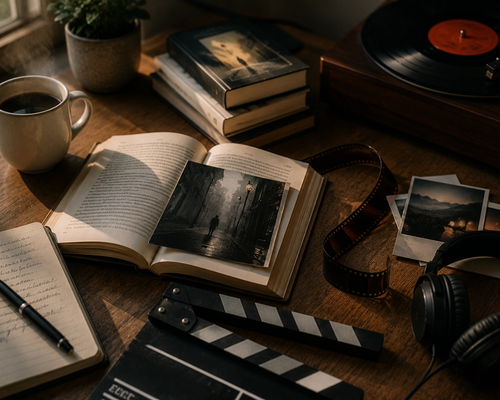
Attention rarely feels important while we are giving it away. We glance at a notification during dinner. We half-listen to someone while thinking about what we need to do next. We watch a film while checking our phones, walk through familiar streets without noticing them, and finish entire days unable to remember much of what actually happened.

We have become very good at recognizing lives that look interesting. They involve constant travel, impressive jobs, beautiful homes, busy social calendars, ambitious projects, expensive restaurants, dramatic announcements, and enough photographs to prove all of it happened. Online, an interesting life can start to resemble a continuous highlight reel.
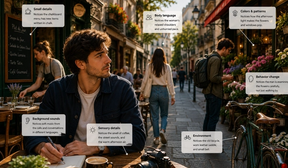
Some people seem to move through the world with a different level of resolution. They notice when someone has changed their hair slightly. They remember the name of the waiter from a restaurant they visited months ago. They spot an unusual building on a street everyone else has walked down a hundred times. They can tell when a friend’s mood has shifted before the friend says anything.

Sometimes you arrive somewhere completely unfamiliar and feel strangely at ease. You do not know the streets. You have no memories attached to the buildings. You may not even speak the language. Yet within a few hours, something about the place feels comfortable. You can imagine having a favorite café there, knowing which market to visit on Saturday, or walking the same route home every evening.

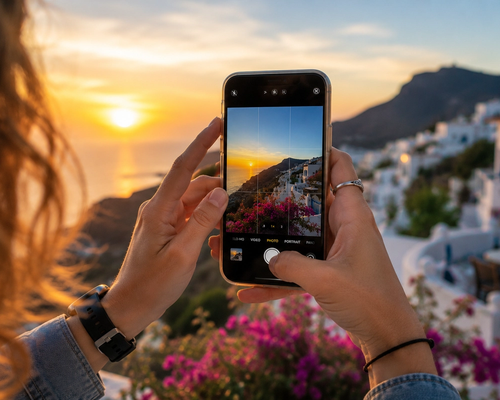
You do not need an expensive camera to take photographs worth keeping. The phone already in your pocket is capable of producing remarkably good images—and, more importantly, it is probably the camera you actually have with you when something worth photographing happens.

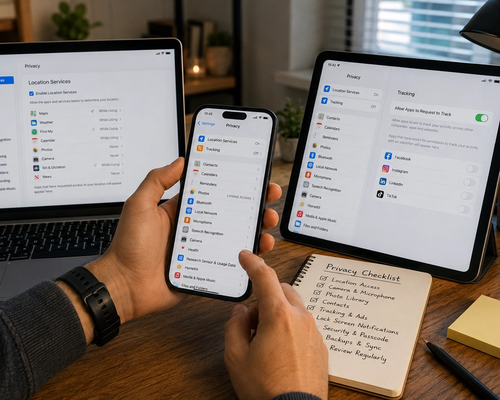
The internet is not something most of us can—or particularly want to—quit. We work online. We make plans through messages. We use maps, banking apps, calendars, news sites, music, podcasts, and group chats. Our phones contain genuinely useful tools alongside the apps that somehow turn five spare minutes into 45.