How to Live Below Your Means Without Feeling Deprived
A
Allan Combs


Living below your means sounds simple: spend less money than you earn. In practice, it can feel like a permanent exercise in saying no.
No to dinners out. No to trips. No to nicer clothes. No to the little purchases that make an ordinary Tuesday more enjoyable. When saving money starts to feel like punishment, it is not surprising that people struggle to maintain it.
But living below your means does not require squeezing every bit of pleasure out of your life. The goal is to create a gap between what you earn and what you spend while still using money for things you genuinely enjoy. That usually requires fewer dramatic sacrifices and more deliberate choices.
It is difficult to spend intentionally when you do not know what your normal spending looks like.
Before cutting anything, look at the last month or two of transactions. Separate fixed expenses such as rent, utilities, insurance, and debt payments from flexible spending such as groceries, restaurants, shopping, entertainment, and subscriptions.
You may discover that the problem is not the occasional coffee you enjoy. It might be several forgotten subscriptions, frequent delivery fees, impulse purchases, or a recurring expense you barely use.
This exercise is not about judging every purchase. It is about identifying the spending that gives you very little in return.
Those expenses are usually the easiest place to start.
Traditional budgeting advice often focuses on reducing everything slightly. Spend a little less on groceries, entertainment, clothes, travel, and restaurants.
That can make your entire life feel cheaper.
Instead, decide what you actually care about and protect some money for it. Then be much more ruthless with categories that matter less.
If travel is important to you, perhaps you keep a dedicated travel budget while driving an older car. If you love restaurants, maybe you eat out regularly but rarely buy new clothes. Someone who loves fashion might make the opposite decision.
Living below your means becomes easier when you stop expecting yourself to value everything equally.
Spend generously on a few priorities and cheaply on everything else.
Saving whatever remains at the end of the month sounds reasonable. Unfortunately, there is often very little left.
A more reliable approach is to treat saving like another recurring bill. When income arrives, automatically move a predetermined amount into savings, investments, or another financial goal.
Then spend from what remains.
The amount does not have to be enormous. Starting with a manageable percentage is better than choosing an ambitious target that forces you to transfer money back two weeks later.
Automation also removes some of the emotional work. You do not have to repeatedly decide whether you feel like saving. The decision has already been made.
As your income increases, consider increasing the automatic amount before your lifestyle expands to absorb every extra dollar.
One-time purchases get a lot of attention because they are visible. Recurring expenses can quietly have a much larger effect.
A more expensive apartment, larger car payment, premium phone plan, multiple subscriptions, or frequent financing payments can lock you into a higher monthly cost of living.
Before taking on a new recurring expense, think about its annual cost rather than only the monthly number.
An extra $100 per month sounds relatively manageable. It is also $1,200 every year. Several decisions like that can dramatically reduce your financial flexibility.
This does not mean avoiding every upgrade. It means recognizing that the purchases you commit to paying repeatedly deserve more consideration than the occasional treat.
A budget with absolutely no room for spontaneity tends to create the financial equivalent of crash dieting.
Eventually, you get tired of restriction and overspend.
Give yourself an amount you can spend without analyzing every decision. Use it for coffee, books, dinners, hobbies, small purchases, or whatever makes life more enjoyable.
Once that money is part of the plan, spending it is not a failure.
This also makes it easier to say no elsewhere. You are not telling yourself, “I cannot spend money.” You are deciding how much you can comfortably spend while still making progress toward larger goals.
There is a big psychological difference.
One of the easiest ways to increase spending is to constantly upgrade things that still work.
A new phone comes out. Your car starts feeling old. Your furniture no longer matches your taste. Your apartment suddenly seems too small because your income has increased.
Sometimes an upgrade genuinely improves your life. Other times, you are replacing something perfectly functional because a better version exists.
Try delaying upgrades rather than automatically rejecting them. Wait a month before replacing the phone. Keep the car another year. Live with the furniture a little longer.
You may still decide to buy the new version. But waiting separates genuine wants from temporary excitement.
The biggest benefit of living below your means is not having the lowest possible monthly expenses. It is having options.
A financial cushion can make an unexpected bill annoying instead of disastrous. Savings can allow you to leave a job you hate, take time off, travel, start a business, move somewhere new, or handle an emergency without immediately borrowing money.
That is what the gap between earning and spending eventually buys: flexibility.
You do not need to become someone who never orders dessert or buys something unnecessary. You simply need your lifestyle to cost less than the income supporting it.
The sweet spot is not deprivation. It is reaching the point where you can enjoy spending money today without constantly borrowing from tomorrow.

Attention rarely feels important while we are giving it away. We glance at a notification during dinner. We half-listen to someone while thinking about what we need to do next. We watch a film while checking our phones, walk through familiar streets without noticing them, and finish entire days unable to remember much of what actually happened.

We have become very good at recognizing lives that look interesting. They involve constant travel, impressive jobs, beautiful homes, busy social calendars, ambitious projects, expensive restaurants, dramatic announcements, and enough photographs to prove all of it happened. Online, an interesting life can start to resemble a continuous highlight reel.

Some people seem to move through the world with a different level of resolution. They notice when someone has changed their hair slightly. They remember the name of the waiter from a restaurant they visited months ago. They spot an unusual building on a street everyone else has walked down a hundred times. They can tell when a friend’s mood has shifted before the friend says anything.

Sometimes you arrive somewhere completely unfamiliar and feel strangely at ease. You do not know the streets. You have no memories attached to the buildings. You may not even speak the language. Yet within a few hours, something about the place feels comfortable. You can imagine having a favorite café there, knowing which market to visit on Saturday, or walking the same route home every evening.

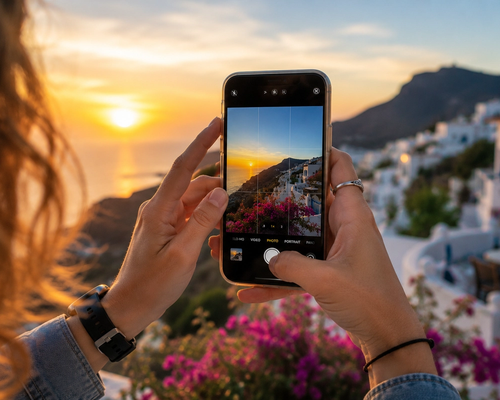
You do not need an expensive camera to take photographs worth keeping. The phone already in your pocket is capable of producing remarkably good images—and, more importantly, it is probably the camera you actually have with you when something worth photographing happens.

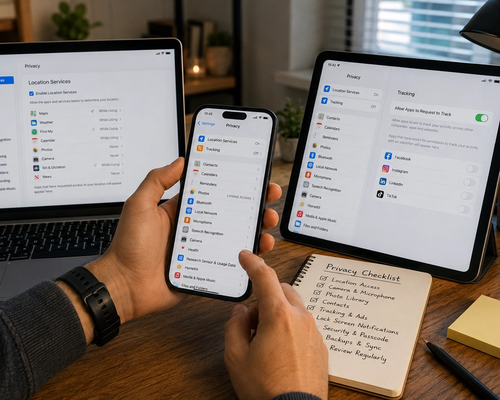
The internet is not something most of us can—or particularly want to—quit. We work online. We make plans through messages. We use maps, banking apps, calendars, news sites, music, podcasts, and group chats. Our phones contain genuinely useful tools alongside the apps that somehow turn five spare minutes into 45.