How to Pack Light Without Sacrificing Anything
D
Dylan Rollins

Packing light sounds wonderful until you actually have to decide what stays home.
Suddenly, every item feels essential. You might need the second pair of jeans. The weather could change. There could be an unexpectedly nice dinner. And surely bringing six pairs of shoes for a four-day trip is simply responsible planning.
Then you arrive at the airport dragging a suitcase filled with things you never wear.
Packing light is not really about taking as little as possible. It is about taking fewer things that do more. With a little planning, you can travel with a smaller bag without spending the entire trip wishing you had packed differently.
One of the biggest causes of overpacking is preparing for imaginary scenarios.
You are going on a relaxed city break but pack clothes for formal dinners, intense workouts, unexpected hiking trips, and three different versions of the weather.
Before opening your suitcase, think through what you will realistically do.
How many days will you be away? Will you mostly walk around a city, sit on a beach, attend meetings, or eat at restaurants? Is there anything on the itinerary that genuinely requires special clothing?
Then check the forecast close to departure.
Packing for specific activities makes decisions easier because every item needs a reason to come with you. “I might wear this” is usually how half a suitcase fills up.
Throwing favorite individual pieces into a suitcase often produces plenty of clothes but surprisingly few complete outfits.
Instead, plan combinations.
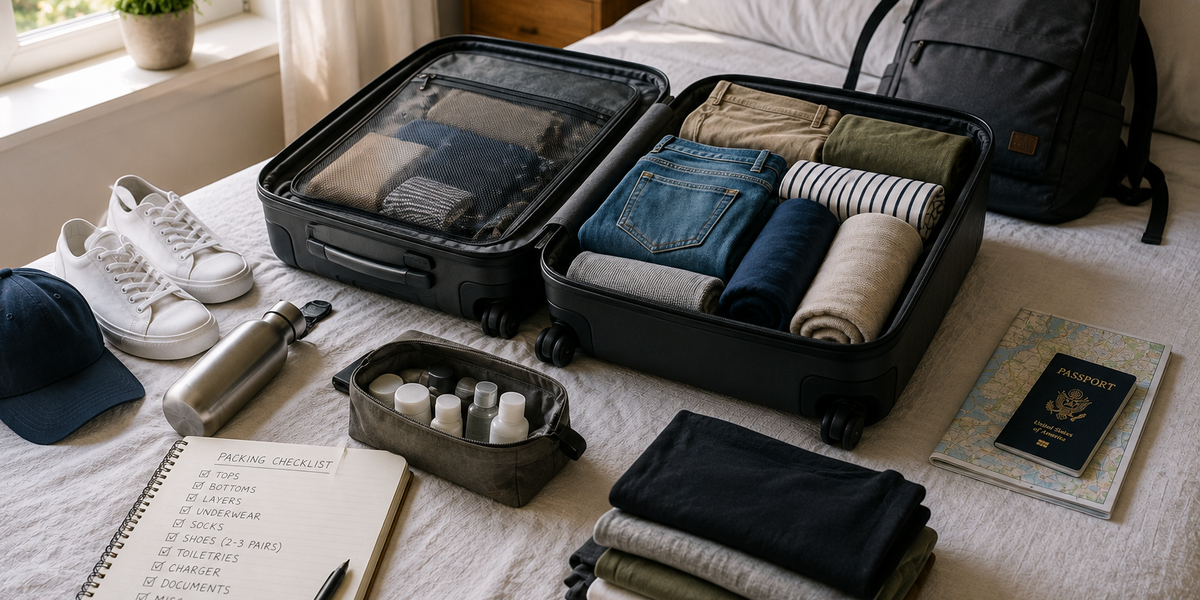
Choose bottoms that work with several tops. Bring layers that can be added or removed. Pick shoes that match most of what you are packing.
A simple color palette can help—not because your holiday wardrobe needs an aesthetic theme, but because clothes that work together create more options from fewer pieces.
Before packing something, ask yourself how many times you could realistically wear it.
A shirt that works with three different bottoms earns its space much more easily than something that only works with one specific outfit.
Shoes are where good packing intentions go to die.
They are bulky, heavy, and surprisingly easy to justify. Walking shoes, sandals, something nicer for dinner, gym shoes, beach shoes—and suddenly half the bag is footwear.
For most trips, two or three pairs are enough.
Wear the bulkiest pair while traveling and pack the others. Choose shoes that can handle more than one situation whenever possible. Comfortable sneakers, for example, may work for sightseeing, casual dinners, and travel days.
If a pair only works with one outfit, reconsider either the shoes or the outfit.
Your feet deserve appropriate footwear. They probably do not need an entire wardrobe.
Packing for uncertain weather can quickly double the size of your luggage.
Layers solve much of the problem.
Instead of bringing separate outfits for warm, cool, and cold conditions, build combinations that can adapt. A lightweight shirt, sweater, and jacket can cover a much wider temperature range than several unrelated heavy pieces.
The same principle works for travel between climates. Items you can wear together give you flexibility without requiring a second wardrobe.
Outerwear deserves particular attention because it takes up so much space. If you need a heavy coat, wear it during transit rather than trying to squeeze it into your suitcase.
Bathroom products quietly consume an enormous amount of luggage space.
You probably do not need a full bottle of shampoo for a five-day trip. Transfer products into smaller containers, use travel sizes, or bring only the amount you realistically expect to use.
The same applies to skincare and cosmetics.
Travel is rarely the ideal moment to bring every product you own. Stick to the basics you consistently use.
Also check what your accommodation provides. Shampoo, soap, hair dryers, towels, and other essentials may already be waiting for you.
There is little benefit in transporting something across a continent only to discover an identical one beside the hotel sink.
A surprising amount of luggage is emotional insurance.
What if I need this?
What if that happens?
What if I spill something?
Some backups are sensible. Medication, important documents, chargers, and genuinely difficult-to-replace essentials deserve careful attention.
But many everyday items can be purchased at your destination if an unlikely situation occurs.
You do not need to prepare for every possible inconvenience.
One useful question is: “If I suddenly needed this, how difficult would it be to get?”
If the answer is “I could buy one in ten minutes,” leaving it behind becomes much easier.
Versatility is the secret weapon of light packing.
A large scarf can become an extra layer, beach cover-up, or something to use on a cold flight. A simple button-down can work over swimwear during the day and with trousers at dinner.
Even your bags can multitask. Instead of packing several handbags, consider one practical daytime bag and perhaps one smaller option if you genuinely need it.
The goal is not to create bizarre multipurpose hacks for everything you own. It is simply to favor items that fit naturally into several parts of the trip.
There is something deeply satisfying about closing a suitcase without sitting on it.
Do not pack your bag to absolute capacity before leaving home.
Empty space makes everything easier. You can find what you need without unpacking the entire suitcase. Clothes do not emerge completely crushed. And if you buy something during the trip, you already have somewhere to put it.
A little spare capacity also prevents the return journey from becoming an elaborate puzzle.
Ultimately, packing light is less about restriction than confidence.
You are trusting that you know what you will actually use, that outfits can be repeated, and that an unexpected situation does not require bringing your entire home with you.
The reward is not just a lighter suitcase.
It is walking out of the airport, lifting your own bag onto a train, changing hotels without dread, and realizing that you had everything you needed after all.

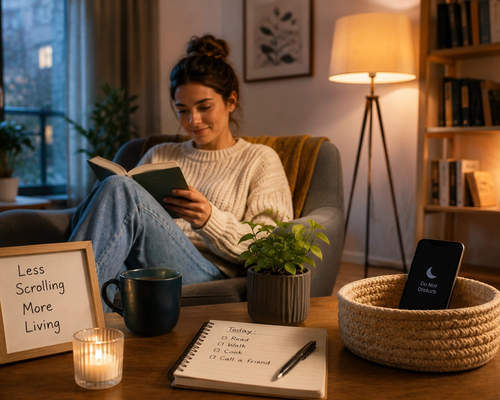
Attention rarely feels important while we are giving it away. We glance at a notification during dinner. We half-listen to someone while thinking about what we need to do next. We watch a film while checking our phones, walk through familiar streets without noticing them, and finish entire days unable to remember much of what actually happened.

We have become very good at recognizing lives that look interesting. They involve constant travel, impressive jobs, beautiful homes, busy social calendars, ambitious projects, expensive restaurants, dramatic announcements, and enough photographs to prove all of it happened. Online, an interesting life can start to resemble a continuous highlight reel.
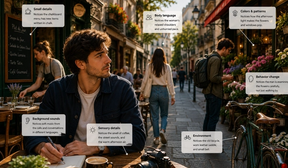
Some people seem to move through the world with a different level of resolution. They notice when someone has changed their hair slightly. They remember the name of the waiter from a restaurant they visited months ago. They spot an unusual building on a street everyone else has walked down a hundred times. They can tell when a friend’s mood has shifted before the friend says anything.

Sometimes you arrive somewhere completely unfamiliar and feel strangely at ease. You do not know the streets. You have no memories attached to the buildings. You may not even speak the language. Yet within a few hours, something about the place feels comfortable. You can imagine having a favorite café there, knowing which market to visit on Saturday, or walking the same route home every evening.

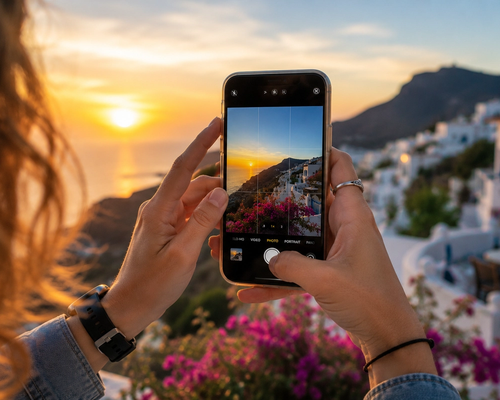
You do not need an expensive camera to take photographs worth keeping. The phone already in your pocket is capable of producing remarkably good images—and, more importantly, it is probably the camera you actually have with you when something worth photographing happens.

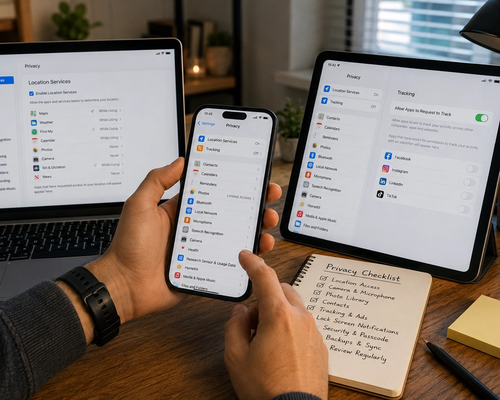
The internet is not something most of us can—or particularly want to—quit. We work online. We make plans through messages. We use maps, banking apps, calendars, news sites, music, podcasts, and group chats. Our phones contain genuinely useful tools alongside the apps that somehow turn five spare minutes into 45.