How to Plan a Trip That Doesn’t Feel Rushed
A
Allan Combs

There is a version of travel that looks fantastic on paper and feels exhausting in real life.
Three cities in six days. An attraction booked every morning. Lunch squeezed between museums. A day trip immediately after a late night. By the end, you need a vacation from your vacation.
The problem is usually not that the trip is too short. It is that too much has been asked of the time available.
A trip that does not feel rushed still requires planning. In fact, thoughtful planning is what creates room for spontaneity. The difference is that you plan around how you want the days to feel, not simply how many things you can fit into them.
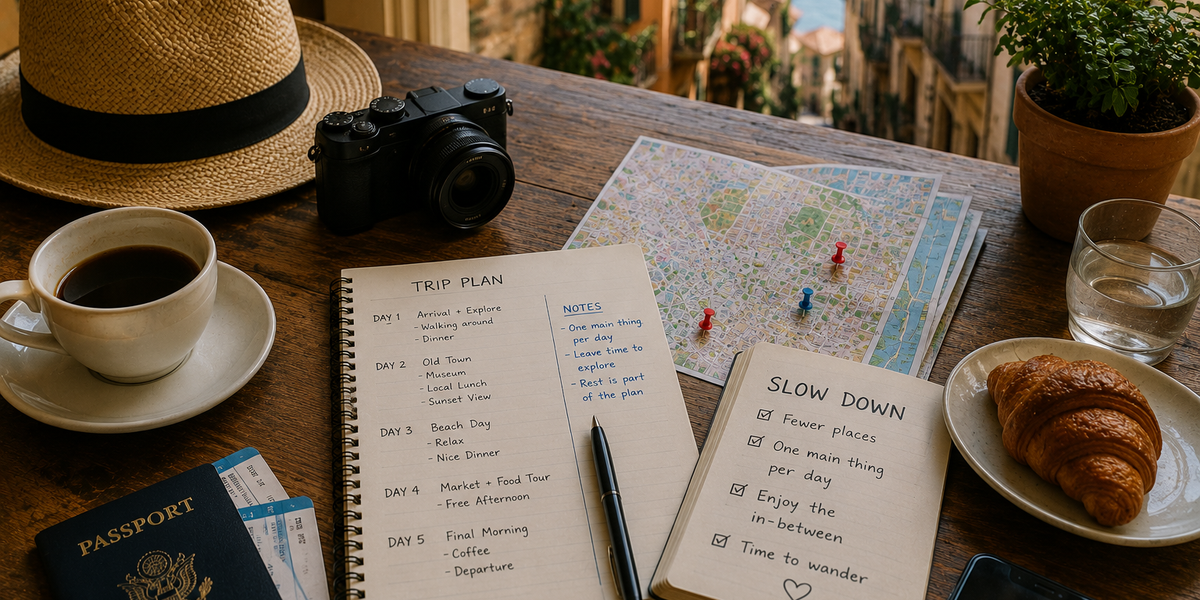
One of the easiest ways to slow down a trip is also the hardest: go to fewer places.
When destinations look close together on a map, adding another stop can seem harmless. But changing locations costs more than the train or flight time.
You need to pack, check out, get to the station or airport, travel, find the next accommodation, check in, unpack, and mentally orient yourself again. A two-hour train journey can easily consume half a day.
Before adding another destination, ask whether it contributes enough to justify that transition.
Four nights in one city often feel much longer than two nights in one city followed by two nights somewhere else.
Staying put also gives you the luxury of familiarity. By the third morning, you know where to get coffee and which street takes you back to the hotel. That feeling is one of the underrated pleasures of slower travel.
You do not literally need to limit yourself to one activity.
The idea is to choose one thing that anchors the day.
Maybe it is a museum, a beach, a long lunch, a walking tour, or a major landmark. Book that if necessary, then allow other activities to develop around it.
If the museum takes longer than expected, you do not immediately fall behind schedule. If you find a great restaurant nearby, you can stay for dessert.
You can still keep a list of optional things to do in the area. The difference is that they remain options rather than obligations.
A day with one priority and three possibilities usually feels much better than a day with four priorities.
Travel itineraries often ignore transition time.
A restaurant may be only 20 minutes from a museum, but you still need to finish what you are doing, find the exit, walk to the station, wait for transportation, and locate the restaurant.
Suddenly, 20 minutes has become 45.
Be particularly generous with time around airports, train stations, major attractions, and reservations.
The same applies to mornings. If you normally need an hour to shower, get dressed, have breakfast, and leave the house, you probably will not magically become a 20-minute person because you are in Rome.
Realistic timing prevents the constant feeling that you are late for your own vacation.
Nothing makes a city break feel more frantic than repeatedly crossing the city.
Instead, organize days geographically.
If you are visiting a museum in one neighborhood, look for restaurants, shops, parks, or other attractions nearby. Spend a few hours wandering there rather than immediately traveling somewhere completely different.
This reduces transportation time and allows you to understand neighborhoods rather than experiencing a city as a series of disconnected attractions.
It also creates more opportunities for accidental discoveries.
The bakery you notice while walking between two places may become more memorable than something you carefully researched months earlier.
Do not schedule every afternoon because you are worried you will waste it.
Empty time is not wasted time.
Leave a morning without tickets. Keep an afternoon open. Give yourself an evening when nobody needs to be anywhere at a particular hour.
That space can become whatever the trip needs.
If you are tired, you rest. If you discover something interesting, you explore it. If the weather changes, you move plans around. If everyone is having a wonderful time at lunch, you order another drink instead of asking for the bill because you have somewhere else to be.
Unscheduled time is what makes an itinerary flexible.
Some things genuinely need to be booked in advance, especially popular attractions, restaurants, tours, or transportation.
But booking everything can make a trip feel surprisingly restrictive.
If breakfast, a museum, lunch, a tour, and dinner all have fixed times, much of your day becomes a series of deadlines.
Reserve the experiences you would genuinely be disappointed to miss. Leave ordinary meals and lower-priority activities flexible whenever possible.
It is also worth checking cancellation policies. Flexible reservations make it easier to change plans when the weather, your energy level, or your interests change.
You are creating an itinerary, not signing a contract with your past self.
Do not wait until everyone is exhausted to decide you need a slower day.
If the trip is longer than a few days, deliberately include lighter periods.
A slow morning after a late night can make the following afternoon far more enjoyable. A beach day between two sightseeing-heavy days gives your body and brain a break.
This becomes especially important when traveling with children, older relatives, or a group with different energy levels.
Travel fatigue accumulates quietly. By the time you notice it, everyone may already be irritable.
Rest works better when it is preventative.
It is tempting to calculate the success of a vacation by quantity.
How many cities? How many landmarks? How many restaurants? How many countries?
But seeing more does not necessarily mean experiencing more.
You can rush through ten famous places and barely remember them, or spend an afternoon wandering one neighborhood and think about it for years.
Before your trip, choose what you would genuinely regret missing. Prioritize those experiences. Let everything else be a bonus.
Then, when you are actually there, give yourself permission to change the plan.
The point of planning is not to control every hour of a trip. It is to remove enough uncertainty that you can enjoy the hours you have.
A good itinerary should occasionally leave you wondering what you feel like doing next.
That is not poor planning.
That is space.

Attention rarely feels important while we are giving it away. We glance at a notification during dinner. We half-listen to someone while thinking about what we need to do next. We watch a film while checking our phones, walk through familiar streets without noticing them, and finish entire days unable to remember much of what actually happened.

We have become very good at recognizing lives that look interesting. They involve constant travel, impressive jobs, beautiful homes, busy social calendars, ambitious projects, expensive restaurants, dramatic announcements, and enough photographs to prove all of it happened. Online, an interesting life can start to resemble a continuous highlight reel.
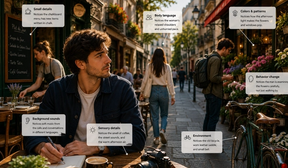
Some people seem to move through the world with a different level of resolution. They notice when someone has changed their hair slightly. They remember the name of the waiter from a restaurant they visited months ago. They spot an unusual building on a street everyone else has walked down a hundred times. They can tell when a friend’s mood has shifted before the friend says anything.
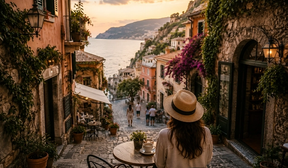
Sometimes you arrive somewhere completely unfamiliar and feel strangely at ease. You do not know the streets. You have no memories attached to the buildings. You may not even speak the language. Yet within a few hours, something about the place feels comfortable. You can imagine having a favorite café there, knowing which market to visit on Saturday, or walking the same route home every evening.

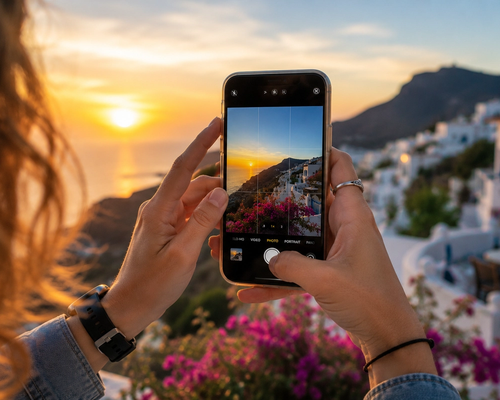
You do not need an expensive camera to take photographs worth keeping. The phone already in your pocket is capable of producing remarkably good images—and, more importantly, it is probably the camera you actually have with you when something worth photographing happens.

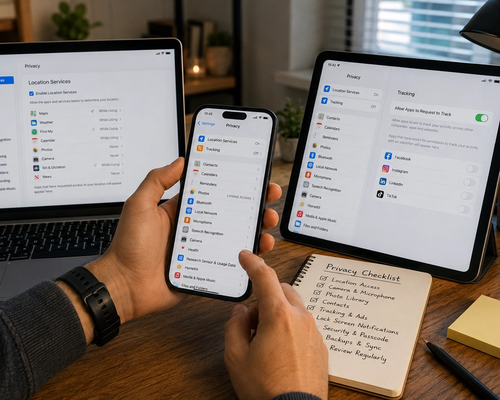
The internet is not something most of us can—or particularly want to—quit. We work online. We make plans through messages. We use maps, banking apps, calendars, news sites, music, podcasts, and group chats. Our phones contain genuinely useful tools alongside the apps that somehow turn five spare minutes into 45.