How to Take Back Control of Your Phone (Without Quitting Tech)
W
Walker York
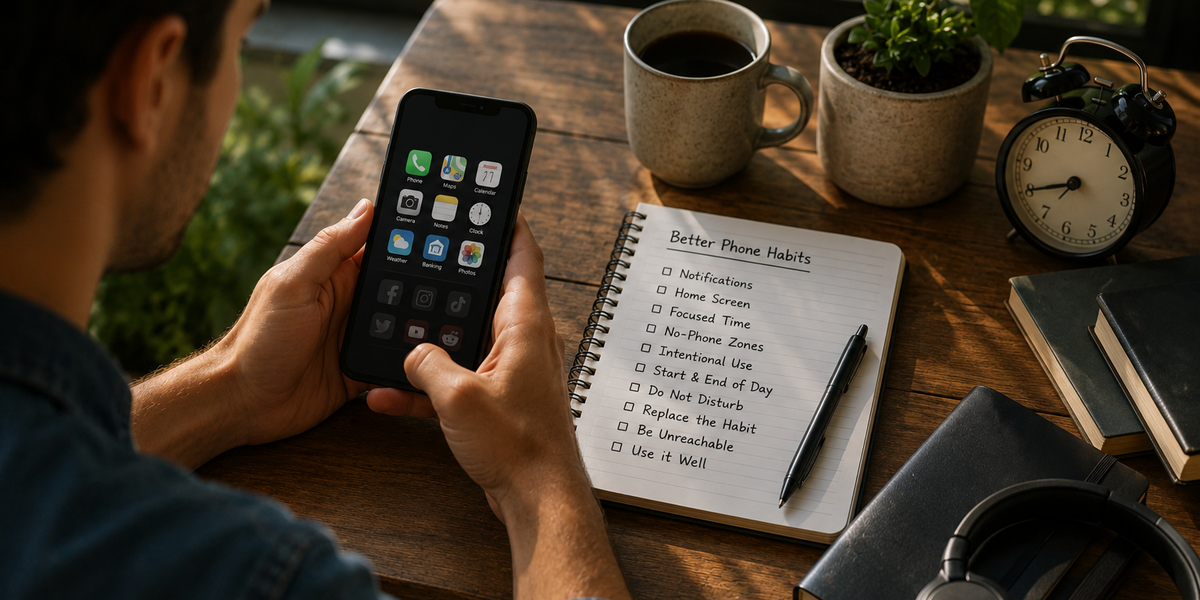

Your phone is probably one of the most useful things you own. It is your camera, map, calendar, music player, bank, notebook, alarm clock, weather forecast, communication hub, and occasionally the device you use to actually make a phone call.
It is also remarkably good at consuming every unoccupied minute of your day.
The answer does not have to be deleting every app, buying a basic phone, or disappearing from the internet. Technology is useful, and most of us have no interest in pretending otherwise.
The more realistic goal is to change the relationship: your phone should be something you deliberately use, not something you automatically reach for whenever nothing else is happening.
Every notification is essentially an app asking you to stop whatever you are doing and pay attention to it instead.
Some deserve that privilege. Most do not.
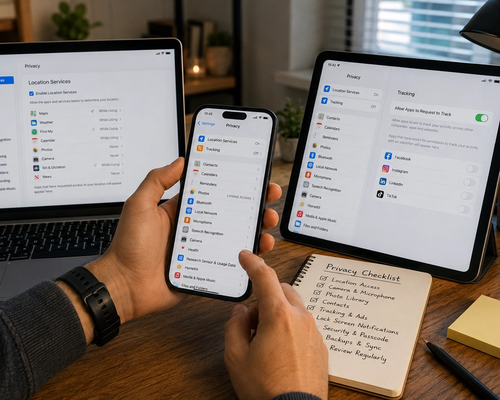
Go through your notification settings app by app. Keep calls, important messages, calendar reminders, and anything genuinely time-sensitive.
Then become much stricter.
Shopping promotions do not need immediate access to you. Neither do game updates, social media likes, restaurant offers, or an app announcing that you have not opened it recently.
Turning off a notification does not prevent you from using the app.
It simply means you decide when to check it.
That is a small but important transfer of control.
Your home screen is valuable real estate.
If it is filled with colorful icons designed to attract attention, you are giving yourself dozens of opportunities to become distracted every time you unlock your phone.
Keep the first screen practical.
Maps, calendar, camera, weather, notes, banking, or whatever tools you genuinely use with intention can stay accessible.
Move social media, shopping, games, and other high-distraction apps onto another page or into folders.
You can go further and remove them from the home screen entirely while keeping them installed.
The extra few seconds required to search for an app may be enough to interrupt the automatic habit of opening it without thinking.
Convenience has concentrated an extraordinary number of activities onto one screen.
You use your phone to check the time and somehow end up reading messages. You open it to play music and find yourself scrolling ten minutes later.
Whenever practical, let other objects perform some of those jobs.
Use an alarm clock if checking your phone first thing every morning is a problem. Wear a watch instead of repeatedly checking the time on your phone. Read physical books or use an e-reader if notifications interrupt your reading.
This does not mean buying a separate gadget for every function.
It simply means recognizing that combining everything into one device also combines every opportunity for distraction.
Instead of trying to reduce phone use everywhere, create a few physical boundaries.
Maybe phones do not come to the dinner table. Perhaps yours charges outside the bedroom. You might leave it in your bag during coffee with a friend rather than placing it on the table.
These rules are easier to follow because they are specific.
You are not relying on yourself to repeatedly decide whether this is a good moment to check your phone. The decision has already been made.
Start with one place.
Dinner is often a good candidate.
You may be surprised by how frequently your hand initially reaches toward a phone that is not there.
There is nothing inherently wrong with scrolling.
Sometimes watching ridiculous videos for half an hour is exactly what you want to do.
The problem is when half an hour happens accidentally.
Before opening a high-distraction app, decide why you are opening it. Are you checking messages? Looking for something specific? Taking a ten-minute break?
You do not need to announce your intentions dramatically every time you open Instagram.
The goal is simply to introduce a moment of awareness.
If you repeatedly discover that you opened an app without knowing why, that is useful information about the habit.
The first and last parts of the day are particularly easy for phones to consume.
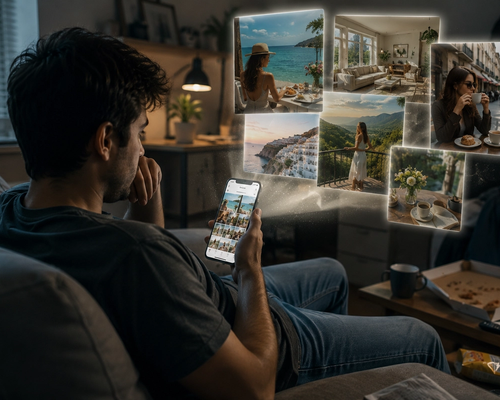
You wake up and immediately absorb messages, headlines, emails, and other people’s lives before you have even left bed.
At night, “I’ll check one thing” somehow becomes another 40 minutes awake.
Create a little distance.
You might wait until after breakfast to check social media. At night, charge your phone away from the bed or choose a point when you stop checking work messages.
The boundary does not need to be extreme.
Even 20 or 30 phone-free minutes at either end of the day can change how those periods feel.
Not every message requires the same response time.
Modern communication can create the expectation that being reachable means being immediately available. It does not have to.
Use focus or do-not-disturb settings to allow calls or messages from important contacts while silencing everything else during work, sleep, meals, or family time.
You can still check messages later.
This is particularly helpful when you need uninterrupted attention but worry about missing something genuinely important.
Technology itself can help create the boundary.
Removing a habit without replacing it leaves an empty space.
If you usually scroll while drinking coffee, what will you do instead?
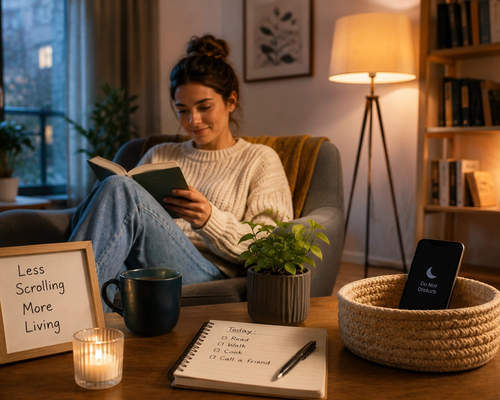
Keep a book nearby. Read a magazine. Put a notebook on your desk. Play music. Take a short walk. Do a crossword. Talk to whoever is in the room.
The replacement does not need to be educational, productive, or impressive.
The point is simply to have another easy option.
Your phone often wins because it is the closest source of entertainment available.
Give it some competition.
You do not need to disappear for an entire weekend.
Start with smaller periods.
Take a walk without your phone. Leave it in another room while watching a film. Spend an hour cooking without checking messages.
Unless your circumstances require constant availability, most things can wait a little longer than they feel like they can.
That realization is strangely freeing.
The world continues. Messages remain there. Nobody needs an immediate response to everything.
Taking control of your phone is not about using technology as little as possible.
It is about using it well.
Keep the group chats that make you laugh. Use maps constantly. Take thousands of photographs. Listen to music, read articles, call people you love, and use whatever apps genuinely make your life easier.
Then make the distracting parts slightly harder to access and the important parts easier.
Your phone does not need to become the enemy.
It just needs to stop being the default answer to every quiet moment.
The goal is not to spend your life offline.
It is to make sure you still have a life when the screen turns off.

Attention rarely feels important while we are giving it away. We glance at a notification during dinner. We half-listen to someone while thinking about what we need to do next. We watch a film while checking our phones, walk through familiar streets without noticing them, and finish entire days unable to remember much of what actually happened.

We have become very good at recognizing lives that look interesting. They involve constant travel, impressive jobs, beautiful homes, busy social calendars, ambitious projects, expensive restaurants, dramatic announcements, and enough photographs to prove all of it happened. Online, an interesting life can start to resemble a continuous highlight reel.
Some people seem to move through the world with a different level of resolution. They notice when someone has changed their hair slightly. They remember the name of the waiter from a restaurant they visited months ago. They spot an unusual building on a street everyone else has walked down a hundred times. They can tell when a friend’s mood has shifted before the friend says anything.

Sometimes you arrive somewhere completely unfamiliar and feel strangely at ease. You do not know the streets. You have no memories attached to the buildings. You may not even speak the language. Yet within a few hours, something about the place feels comfortable. You can imagine having a favorite café there, knowing which market to visit on Saturday, or walking the same route home every evening.

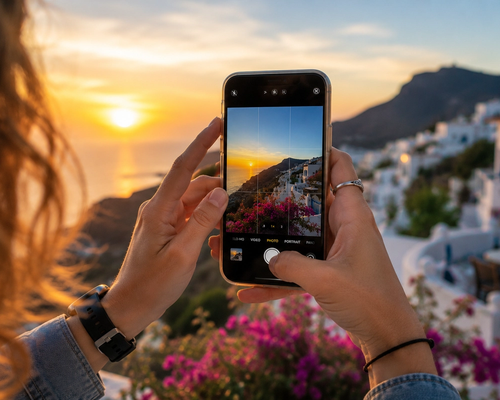
You do not need an expensive camera to take photographs worth keeping. The phone already in your pocket is capable of producing remarkably good images—and, more importantly, it is probably the camera you actually have with you when something worth photographing happens.

The internet is not something most of us can—or particularly want to—quit. We work online. We make plans through messages. We use maps, banking apps, calendars, news sites, music, podcasts, and group chats. Our phones contain genuinely useful tools alongside the apps that somehow turn five spare minutes into 45.