How to Travel Solo Without Being Lonely
H
Hassan Keith


Solo travel gets described in extremes. It is either presented as the ultimate act of independence—just you, a backpack, and a life-changing sunset—or as a slightly sad experience involving dinner for one and nobody to watch your suitcase while you go to the bathroom.
In reality, traveling alone can be both liberating and occasionally lonely.
You get complete control over your time. Nobody cares if you spend three hours in a museum or skip it entirely. You can change restaurants at the last minute, sleep late, wake up early, and build the trip entirely around what interests you.
But there will also be moments when you wish someone were sitting across the table.
The goal is not to eliminate those moments. It is to build a trip where being alone feels more like freedom than isolation.
Some places make solo travel easier than others.
For a first trip, consider somewhere with reliable public transportation, walkable neighborhoods, plenty of cafés and casual restaurants, and enough activities that feel natural to do alone.
Cities can be particularly good because you are constantly surrounded by people without necessarily needing company.
It also helps to choose somewhere you genuinely want to explore. Solo travel becomes much less intimidating when curiosity is stronger than self-consciousness.
You do not need to fly halfway around the world to prove you can travel alone. A weekend somewhere relatively close can teach you what you enjoy—and what you do not—before committing to a longer trip.
Complete freedom sounds wonderful until you wake up somewhere unfamiliar with absolutely no idea what to do.
Plan one or two anchors for each day.
Book a walking tour in the morning. Reserve a museum ticket. Choose a neighborhood you want to explore. Make a dinner reservation somewhere you are excited about.
Then leave space around those plans.
Structure prevents the day from becoming aimless without recreating the rigid schedule you may have been trying to escape.
It also gives you a reason to get out of your room when the temptation to stay inside and scroll becomes surprisingly strong.
You do not need to approach random strangers and announce that you are looking for friends.
Choose environments where interaction already makes sense.
Walking tours, cooking classes, food tours, small-group excursions, language exchanges, workshops, and organized hikes naturally put you around other people.
You already have something to talk about because you are sharing an activity.
Hostels can also be social, but they are not the only option. Many cities have group events and experiences aimed at travelers regardless of where they are staying.
The goal does not have to be making lifelong friends. Sometimes a two-hour conversation with people you never see again is exactly enough social contact for the day.
For many first-time solo travelers, restaurants are the intimidating part.
Walking around alone feels normal. Sitting alone at a table can initially feel as though everyone has noticed.
They probably have not.
Start somewhere casual if that feels easier. Sit at the bar or counter. Bring a book. Choose outdoor seating where there is plenty to watch.
Then gradually allow yourself to enjoy the experience without needing a distraction.
There is something wonderfully uncomplicated about ordering exactly what you want, eating at your own pace, and leaving whenever you feel like it.
And once you become comfortable dining alone while traveling, doing it at home suddenly feels much easier too.
Being alone does not mean disappearing from your existing life.
Message friends. Call your family. Send someone a ridiculous photo from your day. A familiar voice can be particularly comforting in the evening after spending hours navigating an unfamiliar place.
But be careful not to spend the entire trip documenting it for people back home.
If every quiet moment becomes a video call or an hour of messaging, you never fully experience being on your own.
Connection should support the trip rather than replace it.
Share enough to feel connected, then put your phone away and return to where you actually are.
Being alone and feeling lonely are not the same thing.
You can spend an afternoon alone in a beautiful place and feel completely content. You can also stand in a crowded tourist attraction surrounded by thousands of people and suddenly wish someone familiar were beside you.
Loneliness tends to come in waves.
Instead of treating one lonely evening as evidence that solo travel was a terrible idea, respond to what you need.
Call someone. Join a group activity tomorrow. Go sit somewhere lively instead of staying in your room. Visit the same café twice and start recognizing the staff.
Small amounts of familiarity can make an unfamiliar city feel surprisingly comforting.
The greatest advantage of solo travel is not that it makes you more independent or adventurous.
It is that nobody else gets a vote.
You can spend an absurd amount of time somewhere you love. You can skip the famous attraction everyone insists is essential. You can change your itinerary because the weather is good and you would rather sit by the water.
There is no negotiation.
This is your opportunity to discover how you actually like to travel when nobody else’s preferences are influencing the plan.
Take advantage of it.
Some solo travel advice makes the experience sound like a continuous journey of self-discovery.
It is still travel.
You will get tired. You may take the wrong train. You might eat a disappointing dinner. There may be an evening when you would genuinely prefer to have someone with you.
None of that means the trip failed.
The best solo trips contain a mixture of independence, connection, awkwardness, excitement, boredom, and moments of unexpected confidence.
Eventually, something interesting happens.
You stop thinking so much about the fact that you are traveling alone.
You are simply traveling.
And once that happens, being by yourself stops feeling like the defining feature of the trip and starts feeling like one of its freedoms.

Attention rarely feels important while we are giving it away. We glance at a notification during dinner. We half-listen to someone while thinking about what we need to do next. We watch a film while checking our phones, walk through familiar streets without noticing them, and finish entire days unable to remember much of what actually happened.

We have become very good at recognizing lives that look interesting. They involve constant travel, impressive jobs, beautiful homes, busy social calendars, ambitious projects, expensive restaurants, dramatic announcements, and enough photographs to prove all of it happened. Online, an interesting life can start to resemble a continuous highlight reel.
Some people seem to move through the world with a different level of resolution. They notice when someone has changed their hair slightly. They remember the name of the waiter from a restaurant they visited months ago. They spot an unusual building on a street everyone else has walked down a hundred times. They can tell when a friend’s mood has shifted before the friend says anything.

Sometimes you arrive somewhere completely unfamiliar and feel strangely at ease. You do not know the streets. You have no memories attached to the buildings. You may not even speak the language. Yet within a few hours, something about the place feels comfortable. You can imagine having a favorite café there, knowing which market to visit on Saturday, or walking the same route home every evening.
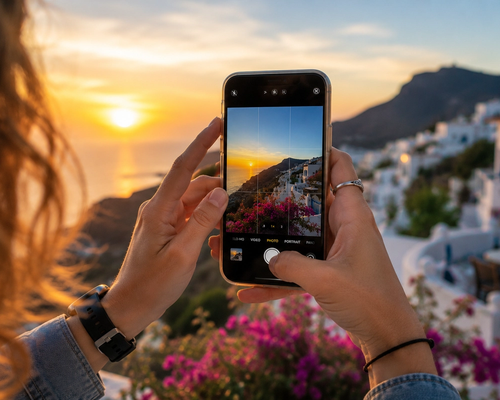
You do not need an expensive camera to take photographs worth keeping. The phone already in your pocket is capable of producing remarkably good images—and, more importantly, it is probably the camera you actually have with you when something worth photographing happens.

The internet is not something most of us can—or particularly want to—quit. We work online. We make plans through messages. We use maps, banking apps, calendars, news sites, music, podcasts, and group chats. Our phones contain genuinely useful tools alongside the apps that somehow turn five spare minutes into 45.