The Cities Worth Visiting at Least Once in Your Life
D
Dylan Rollins

There is no objective list of cities everyone needs to visit before they die. Some people want museums and architecture. Others want street food, nightlife, beaches, history, or simply somewhere they can walk for hours without getting bored.
Still, certain cities offer such a distinctive combination of history, culture, food, architecture, and everyday life that seeing them in person feels different from knowing them through photographs.
They are not necessarily the easiest or cheapest destinations. Some are crowded. Some are chaotic. A few can be overwhelming on the first day.
But they give you something difficult to find anywhere else.
Paris may be romanticized beyond reason, but underneath all the clichés is an extraordinary city.
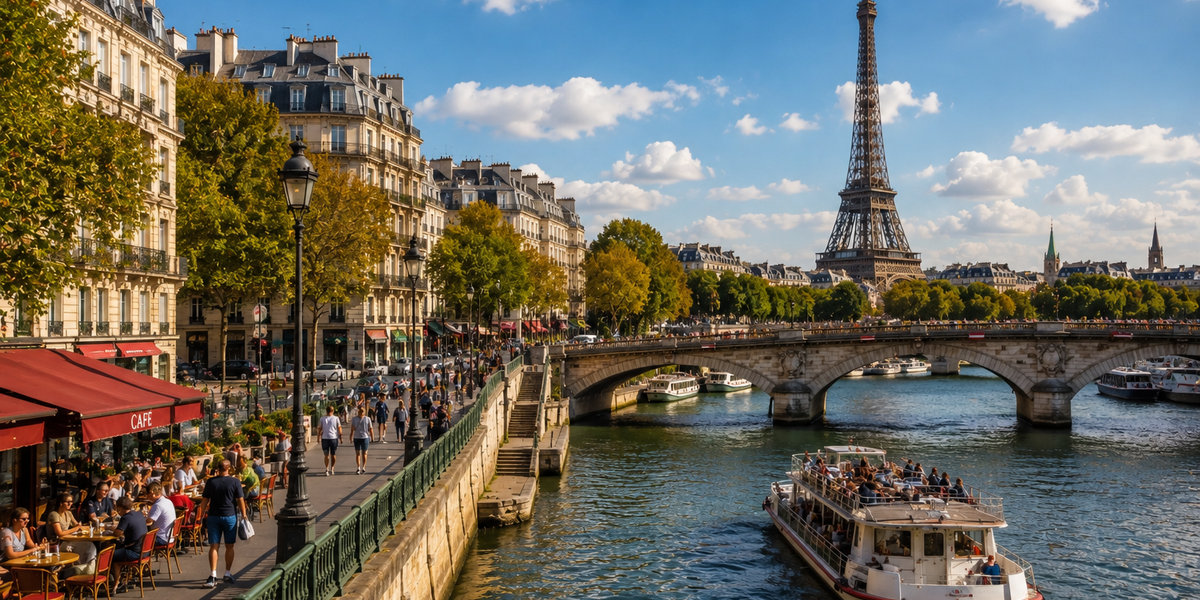
Yes, see the Eiffel Tower. Walk along the Seine. Visit the Louvre if you want to. But Paris becomes more interesting when you stop moving between landmarks and start experiencing its neighborhoods.
Spend a morning in a café. Walk through the Marais. Browse bookstores and markets. Buy bread and cheese and sit somewhere beautiful without turning it into an itinerary item.
The architecture gives Paris much of its grandeur, but its smaller rituals give it personality.
You can visit repeatedly and still feel as though you have only seen one version of it.
Rome does something few cities can: it makes thousands of years of history feel like part of ordinary life.
Ancient ruins appear beside busy roads. Churches contain masterpieces you might walk past without realizing what is inside. You turn a corner and encounter a fountain that would be the main attraction in another city.
Of course, there are the essentials: the Colosseum, Roman Forum, Pantheon, Trevi Fountain, and Vatican City.
But leave time for long lunches, evening walks, tiny streets, espresso at the counter, and neighborhoods beyond the most famous sights.
Rome is chaotic, beautiful, imperfect, and almost impossible to experience efficiently.
That is part of its appeal.
Tokyo can feel futuristic and deeply traditional within the space of a few train stops.
One hour might involve neon signs, enormous crossings, arcades, and skyscrapers. The next might involve a quiet shrine or tiny restaurant with only a handful of seats.
The food alone could justify the trip. There is extraordinary sushi and ramen, of course, but also convenience-store snacks, bakeries, yakitori, curry, noodles, and countless regional specialties.
Tokyo’s scale can initially feel overwhelming, so it helps to treat it as a collection of neighborhoods rather than one enormous city.
You will never see everything.
That is a good reason to return.
Few cities make geography feel as dramatic as Istanbul.
The city stretches across Europe and Asia, divided by the Bosphorus and layered with centuries of Roman, Byzantine, Ottoman, and modern Turkish history.
Visit Hagia Sophia, the Blue Mosque, Topkapı Palace, and the Grand Bazaar. Then take a ferry.
Seeing Istanbul from the water, surrounded by commuter boats, mosques, waterfront neighborhoods, and circling gulls, is one of the city’s simplest pleasures.
Food deserves plenty of time too. Breakfast can become an event, while kebabs, fish sandwiches, meze, pastries, and endless glasses of tea make eating part of the sightseeing.
New York feels familiar even before you arrive.
Its streets, taxis, skyline, parks, apartments, restaurants, and subway stations have appeared in so many films and television shows that visiting can feel strangely like walking into a fictional world.
Then the real city quickly takes over.
New York’s appeal comes from density. Food, theater, art, music, shopping, architecture, and people from almost everywhere are compressed into a relatively small geographic area.
Walk across the Brooklyn Bridge. Spend hours in a museum. Eat something at midnight. Sit in Central Park. Wander through neighborhoods rather than spending the entire trip around Times Square.
New York can be exhausting.
It can also make almost anywhere you visit immediately afterward feel unusually quiet.
Marrakech is a city you experience through your senses.
The medina is filled with narrow streets, spices, textiles, motorbikes, food stalls, courtyards, workshops, and shops selling almost everything imaginable.
Stay in a traditional riad if you can. The contrast between the busy streets outside and a quiet interior courtyard is part of the experience.
Marrakech can be intense, particularly for first-time visitors. Give yourself time to adjust rather than trying to conquer the medina immediately.
And leave space for Moroccan food: tagines, couscous, pastries, fresh bread, and mint tea that somehow keeps appearing throughout the day.
Cape Town has one of the most dramatic natural settings of any major city.
Table Mountain rises behind the city while beaches, cliffs, vineyards, and scenic coastal roads sit within easy reach.
That makes it particularly good for travelers who do not want to choose between a city break and an outdoor trip.
You can spend one day exploring neighborhoods and restaurants, another hiking or visiting the coast, and another traveling through nearby wine country.
Cape Town’s history also deserves serious attention. Visiting places connected to apartheid and South Africa’s political history adds important context to the beauty surrounding the city.
Mexico City is enormous, energetic, creative, and one of the world’s great food destinations.
You can eat extraordinarily well at almost every price level, from street tacos to ambitious tasting menus.
But food is only part of the attraction.
The city has major museums, historic architecture, leafy neighborhoods, markets, parks, galleries, and layers of history stretching back long before modern Mexico.
Spend time in neighborhoods such as Roma and Condesa, explore the historic center, and leave room for a day trip to Teotihuacán.
It is the kind of city that rewards curiosity more than rigid planning.
Bucket lists are useful for inspiration, but they can also make travel strangely competitive.
You do not need to visit 50 countries or photograph every famous capital to be well traveled.
Sometimes the city that stays with you is not the one everyone told you would change your life. It is the place you chose almost accidentally—the city where you found a favorite café, walked until midnight, met someone interesting, or simply felt unusually happy.
Visit the famous cities. Many deserve their reputations.
But leave some room on your list for places you know almost nothing about.
Those are often the ones that surprise you most.

Attention rarely feels important while we are giving it away. We glance at a notification during dinner. We half-listen to someone while thinking about what we need to do next. We watch a film while checking our phones, walk through familiar streets without noticing them, and finish entire days unable to remember much of what actually happened.
We have become very good at recognizing lives that look interesting. They involve constant travel, impressive jobs, beautiful homes, busy social calendars, ambitious projects, expensive restaurants, dramatic announcements, and enough photographs to prove all of it happened. Online, an interesting life can start to resemble a continuous highlight reel.
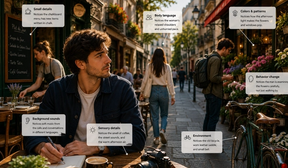
Some people seem to move through the world with a different level of resolution. They notice when someone has changed their hair slightly. They remember the name of the waiter from a restaurant they visited months ago. They spot an unusual building on a street everyone else has walked down a hundred times. They can tell when a friend’s mood has shifted before the friend says anything.
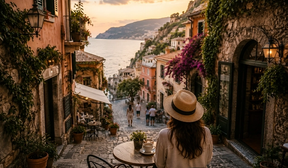
Sometimes you arrive somewhere completely unfamiliar and feel strangely at ease. You do not know the streets. You have no memories attached to the buildings. You may not even speak the language. Yet within a few hours, something about the place feels comfortable. You can imagine having a favorite café there, knowing which market to visit on Saturday, or walking the same route home every evening.
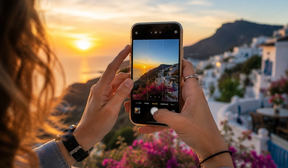
You do not need an expensive camera to take photographs worth keeping. The phone already in your pocket is capable of producing remarkably good images—and, more importantly, it is probably the camera you actually have with you when something worth photographing happens.

The internet is not something most of us can—or particularly want to—quit. We work online. We make plans through messages. We use maps, banking apps, calendars, news sites, music, podcasts, and group chats. Our phones contain genuinely useful tools alongside the apps that somehow turn five spare minutes into 45.