The Difference Between a Tourist and a Traveler
W
Walker York

Few travel debates are as unnecessarily competitive as the distinction between a “tourist” and a “traveler.”
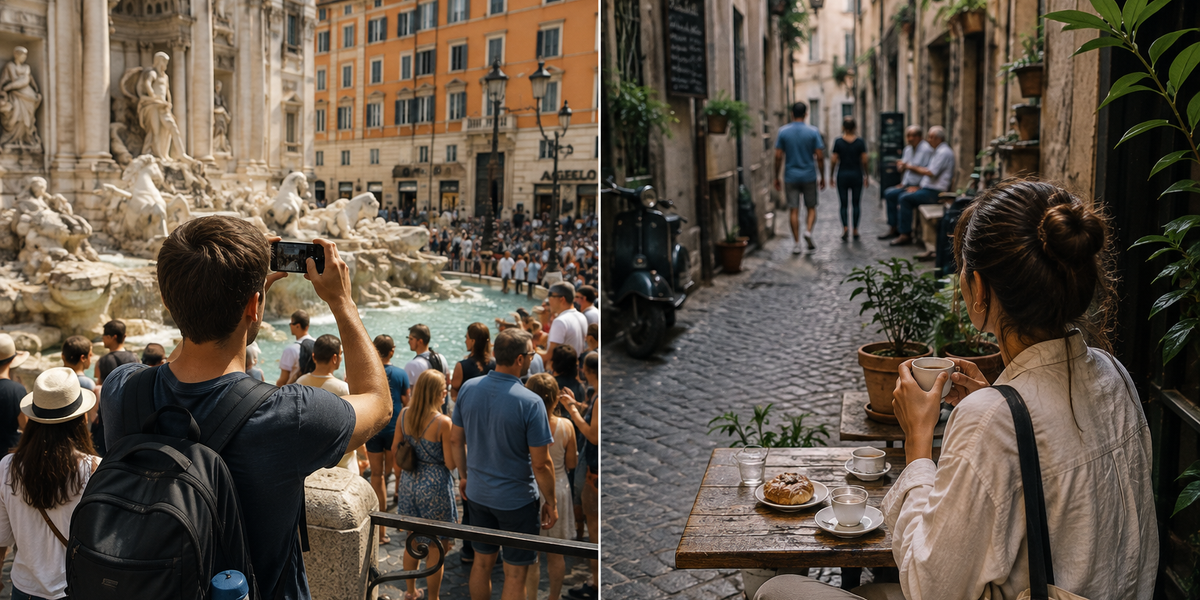
The tourist, according to the stereotype, follows a guidebook, takes photos of famous landmarks, eats near the main square, and buys a souvenir magnet. The traveler finds an unnamed restaurant down a side street, knows where locals drink coffee, and somehow returns home having had a profound cultural experience.
It is a convenient distinction. It is also mostly imaginary.
Anyone visiting somewhere temporarily is, in some sense, a tourist. Seeing famous places does not make your experience less meaningful, and avoiding them does not automatically make it more authentic. The real difference is not what you call yourself.
It is how you experience the place.
There is nothing wrong with wanting to see famous landmarks.
If you travel to Paris, seeing the Eiffel Tower is not a failure of imagination. If you visit Rome, you are allowed to want to see the Colosseum. Famous places are often famous for good reason.
The difference comes in what happens around them.
A checklist-focused trip can turn destinations into a series of objects to observe, photograph, and leave. You arrive, confirm that the landmark exists, take the picture, and move on to the next one.
A more curious traveler asks questions.
Why is this here? What happened in this neighborhood? How do people actually use this space today? What does this place mean beyond the photograph?
You can visit exactly the same attraction and have completely different experiences depending on how much attention you give it.
Tourism naturally concentrates people around exceptional places.
Historic centers, monuments, museums, beaches, viewpoints, and famous restaurants dominate itineraries because visitors have limited time.
But much of what makes a destination interesting happens between those attractions.
It is the morning commute. The neighborhood bakery. Families filling a park after school. People arguing cheerfully over coffee. The supermarket filled with products you have never seen before.
Travelers tend to notice these ordinary details.
That might mean walking instead of taking a taxi, spending an afternoon in a residential neighborhood, visiting a local market, or sitting at a café long enough to observe what happens around you.
You do not need to search obsessively for “hidden gems.” Sometimes you simply need to slow down enough to notice ordinary ones.
Travel makes you temporarily incompetent.
You do not know which train ticket to buy. You pronounce something incorrectly. You stand on the wrong side of an escalator. You misunderstand a menu.
That can be uncomfortable.
The stereotypical tourist expects the destination to accommodate them. A thoughtful traveler accepts that they are the visitor and tries to understand how things work.
Learning a few basic words helps. So does reading about local customs before arriving.
More importantly, it requires a little humility.
You will get things wrong. Someone may correct you. Something that seems strange to you may be completely ordinary to everyone who lives there.
Curiosity works much better than judgment.
Ironically, trying too hard to avoid being a tourist can create its own ridiculous behavior.
People refuse to eat somewhere because other visitors are there. They avoid major attractions because they are “too touristy.” They become obsessed with finding places supposedly known only to locals.
But locals visit famous landmarks too. They also eat fast food, shop at chains, and occasionally choose restaurants because they are convenient.
Authenticity is complicated.
You do not need to spend your trip proving that you discovered something nobody else knows about.
Eat somewhere because the food looks good. Visit the famous museum because the art interests you. Take the scenic boat ride even if everyone else holding a ticket is also on vacation.
Travel is not a competition to appear least like a tourist.
A destination is somebody else’s home.
That sounds obvious, but it is easy to forget when a place is being presented primarily as somewhere to vacation.
Respect means learning basic expectations around dress, photography, tipping, religious sites, public behavior, and the environment.
It also means recognizing that local life continues around tourism.
People are trying to get to work while visitors block the pavement for photos. Residents need housing in neighborhoods popular with short-term rentals. Beaches and historic areas still need to be cared for after tourists leave.
You do not have to solve every complicated issue connected to tourism.
You can simply travel with the awareness that your experience is not the only one that matters.
Tourists are often caricatured as people following rigid itineraries, but almost anyone can fall into this trap.
You spent months researching the trip. You booked the restaurants. You saved 47 locations on a map.
Then you arrive and discover that you do not actually want to do what your spreadsheet says.
A good traveler changes the plan.
Stay at lunch longer. Skip the museum if everyone is exhausted. Return to the neighborhood you loved yesterday. Cancel the day trip if the weather is terrible.
Planning is useful because it gives you options.
It should not become a set of instructions you are afraid to disobey.
Ultimately, the distinction falls apart.
You can eat at a restaurant recommended by a guidebook and have an unforgettable conversation with the person at the next table. You can visit the most photographed landmark in the country and be genuinely moved by it.
You can also visit an obscure village, eat somewhere with no English menu, and learn absolutely nothing meaningful about the culture.
Being a “traveler” is not about going somewhere tourists have not discovered.
It is about curiosity, flexibility, respect, and attention.
Take the photo. Buy the magnet. Visit the famous square.
Then walk another few streets. Learn something about where you are. Notice how people live. Try something unfamiliar. Ask questions. Leave enough room for the place to be more complicated than the version you imagined before arriving.
The goal is not to avoid looking like a tourist.
You are one.
The goal is to be a good one.

Attention rarely feels important while we are giving it away. We glance at a notification during dinner. We half-listen to someone while thinking about what we need to do next. We watch a film while checking our phones, walk through familiar streets without noticing them, and finish entire days unable to remember much of what actually happened.
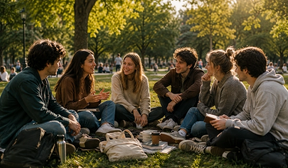
We have become very good at recognizing lives that look interesting. They involve constant travel, impressive jobs, beautiful homes, busy social calendars, ambitious projects, expensive restaurants, dramatic announcements, and enough photographs to prove all of it happened. Online, an interesting life can start to resemble a continuous highlight reel.
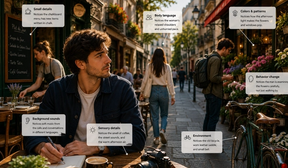
Some people seem to move through the world with a different level of resolution. They notice when someone has changed their hair slightly. They remember the name of the waiter from a restaurant they visited months ago. They spot an unusual building on a street everyone else has walked down a hundred times. They can tell when a friend’s mood has shifted before the friend says anything.
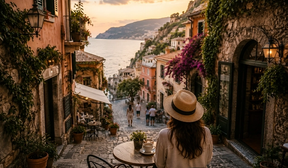
Sometimes you arrive somewhere completely unfamiliar and feel strangely at ease. You do not know the streets. You have no memories attached to the buildings. You may not even speak the language. Yet within a few hours, something about the place feels comfortable. You can imagine having a favorite café there, knowing which market to visit on Saturday, or walking the same route home every evening.
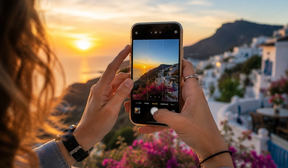
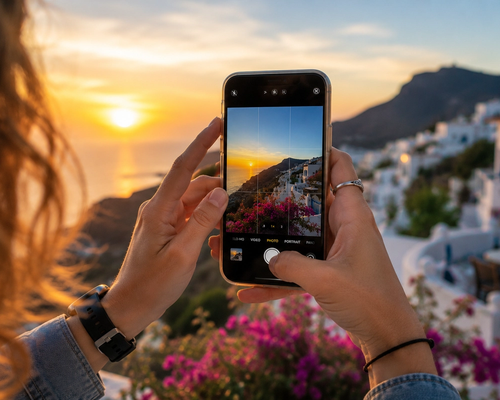
You do not need an expensive camera to take photographs worth keeping. The phone already in your pocket is capable of producing remarkably good images—and, more importantly, it is probably the camera you actually have with you when something worth photographing happens.

The internet is not something most of us can—or particularly want to—quit. We work online. We make plans through messages. We use maps, banking apps, calendars, news sites, music, podcasts, and group chats. Our phones contain genuinely useful tools alongside the apps that somehow turn five spare minutes into 45.