The Habits of People Who Always Seem Calm
D
Dylan Rollins


Some people seem almost impossible to rattle. A delayed flight, a difficult coworker, a packed schedule, or a minor disaster at home happens, and they somehow remain steady. They are not necessarily less busy, less stressed, or naturally more relaxed than everyone else. Often, they have simply developed habits that keep everyday pressure from turning into constant emotional chaos.
Being calm does not mean never getting angry, anxious, frustrated, or overwhelmed. It means being able to experience those emotions without immediately letting them take control. And while personality certainly plays a role, calmness is also something people practice.
Here are some of the habits that tend to make the biggest difference.
Calm people rarely treat their first emotional response as an instruction.
When something irritating happens, they might still feel the immediate rush of frustration. The difference is that they do not automatically send the angry message, raise their voice, make a dramatic decision, or assume the worst. They give themselves a little space between what happened and what they do next.
Sometimes that space is only a few seconds. They take a breath, reread the email, walk into another room, or decide to respond later. That tiny delay can prevent a temporary emotion from creating a much bigger problem.
Over time, pausing becomes less of a technique and more of a default setting. Instead of asking, “What do I feel like doing right now?” they give themselves enough time to ask, “What response will actually help?”
One of the fastest ways to feel permanently stressed is to make everything a priority.
People who seem calm tend to be better at separating genuine urgency from ordinary inconvenience. A missed deadline with serious consequences deserves attention. A delayed reply to a casual message probably does not. A family emergency matters immediately. A messy kitchen can wait.
This distinction protects their attention.
Rather than carrying a mental list in which every unfinished task is flashing red, they decide what actually needs to happen now, what can happen later, and what may not need to happen at all.
That does not mean calm people are unusually organized or productive. Some are. Some definitely are not. The useful habit is simply refusing to turn every responsibility into an emergency.
A schedule with no breathing room makes even small problems stressful.
If you need every train to arrive on time, every meeting to finish exactly as scheduled, and every child to put their shoes on immediately for your day to work, stress is almost guaranteed.
People who appear consistently calm often build some margin into their routines. They leave a little earlier. They avoid scheduling every hour. They give themselves realistic deadlines rather than optimistic ones. They know that tasks usually take longer than expected.
This margin works like a buffer. When something goes wrong—and something eventually will—it does not automatically derail the entire day.
You cannot create extra space around everything, especially during genuinely demanding periods of life. But even small amounts of margin can reduce the feeling that you are constantly racing against the clock.
Calm people are not magically immune to uncertainty. They are often simply more selective about where they spend their energy.
They prepare for the presentation, but they cannot control exactly how everyone responds. They leave for the airport early, but they cannot control whether the flight is delayed. They communicate clearly in a relationship, but they cannot control another person’s reaction.
There is a practical difference between solving a problem and repeatedly thinking about a problem.
When action is possible, calm people tend to take it. When there is genuinely nothing useful left to do, they are more willing to stop mentally wrestling with the situation.
That is not indifference. It is recognizing that worry does not become productive simply because you do more of it.
Many of the habits behind emotional stability are remarkably unglamorous.
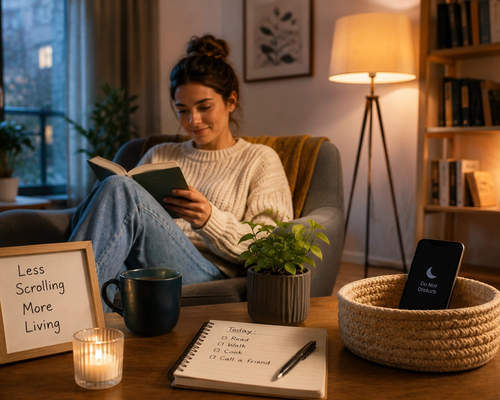
Sleep matters. Regular meals matter. Movement matters. Time away from screens matters. So does having moments when nobody needs anything from you.
When those basics disappear, everyday annoyances become harder to handle. A mildly irritating conversation can feel catastrophic when you are exhausted, hungry, overstimulated, and already running late.
Calm people are not necessarily perfect about these things. The difference is that they tend to recognize them as maintenance rather than luxuries.
They also notice their own warning signs. Maybe they become unusually impatient when they need rest. Maybe scrolling late at night makes them anxious. Maybe saying yes to too many plans leaves them resentful. Knowing those patterns makes it easier to intervene before reaching a breaking point.
This may be one of the least obvious calm-person habits.
Constantly trying to keep everyone happy creates an enormous amount of internal pressure. You say yes when you want to say no. You overexplain your choices. You rearrange your schedule to avoid inconveniencing someone else. Then you wonder why you feel overwhelmed.
People with stronger boundaries accept that occasionally someone will be disappointed.
They can say, “I can’t do that this week,” without producing a five-paragraph justification. They do not volunteer for every responsibility. They understand that protecting their time sometimes requires tolerating another person’s temporary frustration.
That ability creates a surprising amount of peace.
Perhaps the biggest misconception is that calm people stay calm.
They do not.
They lose patience. They worry. They have bad mornings. They get overwhelmed and occasionally say things they regret. The difference is often how quickly they recover.
Instead of turning one difficult moment into an entire difficult day, they reset. They apologize if necessary. They change plans. They go for a walk, eat something, sleep on the decision, or simply try again.
Real calmness is not the absence of stress. It is the ability to return to yourself after stress arrives.
And that may be the most useful habit of all: not expecting life to become perfectly peaceful, but becoming better at finding your way back to steady ground when it isn’t.

Attention rarely feels important while we are giving it away. We glance at a notification during dinner. We half-listen to someone while thinking about what we need to do next. We watch a film while checking our phones, walk through familiar streets without noticing them, and finish entire days unable to remember much of what actually happened.

We have become very good at recognizing lives that look interesting. They involve constant travel, impressive jobs, beautiful homes, busy social calendars, ambitious projects, expensive restaurants, dramatic announcements, and enough photographs to prove all of it happened. Online, an interesting life can start to resemble a continuous highlight reel.
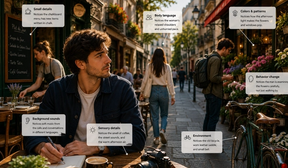
Some people seem to move through the world with a different level of resolution. They notice when someone has changed their hair slightly. They remember the name of the waiter from a restaurant they visited months ago. They spot an unusual building on a street everyone else has walked down a hundred times. They can tell when a friend’s mood has shifted before the friend says anything.

Sometimes you arrive somewhere completely unfamiliar and feel strangely at ease. You do not know the streets. You have no memories attached to the buildings. You may not even speak the language. Yet within a few hours, something about the place feels comfortable. You can imagine having a favorite café there, knowing which market to visit on Saturday, or walking the same route home every evening.

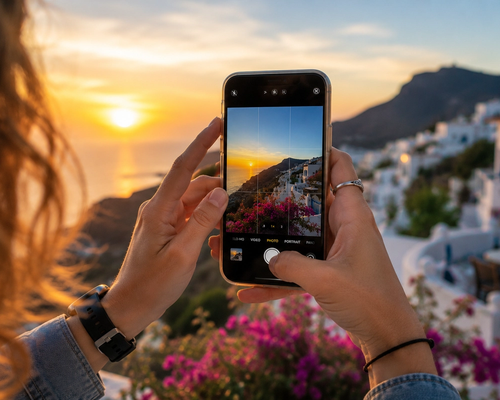
You do not need an expensive camera to take photographs worth keeping. The phone already in your pocket is capable of producing remarkably good images—and, more importantly, it is probably the camera you actually have with you when something worth photographing happens.

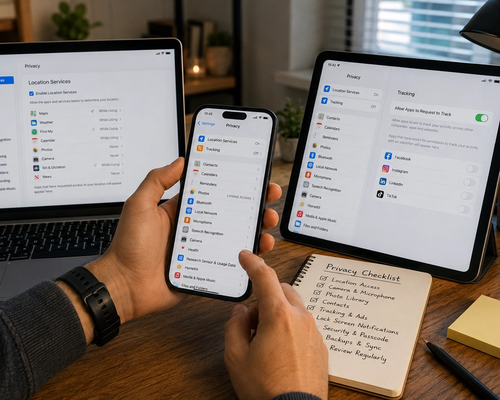
The internet is not something most of us can—or particularly want to—quit. We work online. We make plans through messages. We use maps, banking apps, calendars, news sites, music, podcasts, and group chats. Our phones contain genuinely useful tools alongside the apps that somehow turn five spare minutes into 45.