The Historic Cities Where You Can Actually Feel the Past
G
Gilbert Ellis

Every city has history, but in some places the past feels unusually close.
It is in the streets beneath your feet, the walls surrounding the old town, the buildings still serving purposes centuries after they were constructed. You do not have to enter a museum to find it. You order coffee beside a Roman ruin, walk through a medieval gate on the way to dinner, or hear church bells from a building older than your country.
The most memorable historic cities are not frozen in time. People still live, work, commute, shop, and complain about traffic there. That collision between ordinary modern life and extraordinary history is exactly what makes them fascinating.
These are some of the cities where the past does not feel quite so distant.
Few cities reveal their history as casually as Rome.
You can walk past ancient columns on the way to lunch, discover a centuries-old church down an ordinary street, and encounter archaeological remains while using public transportation.
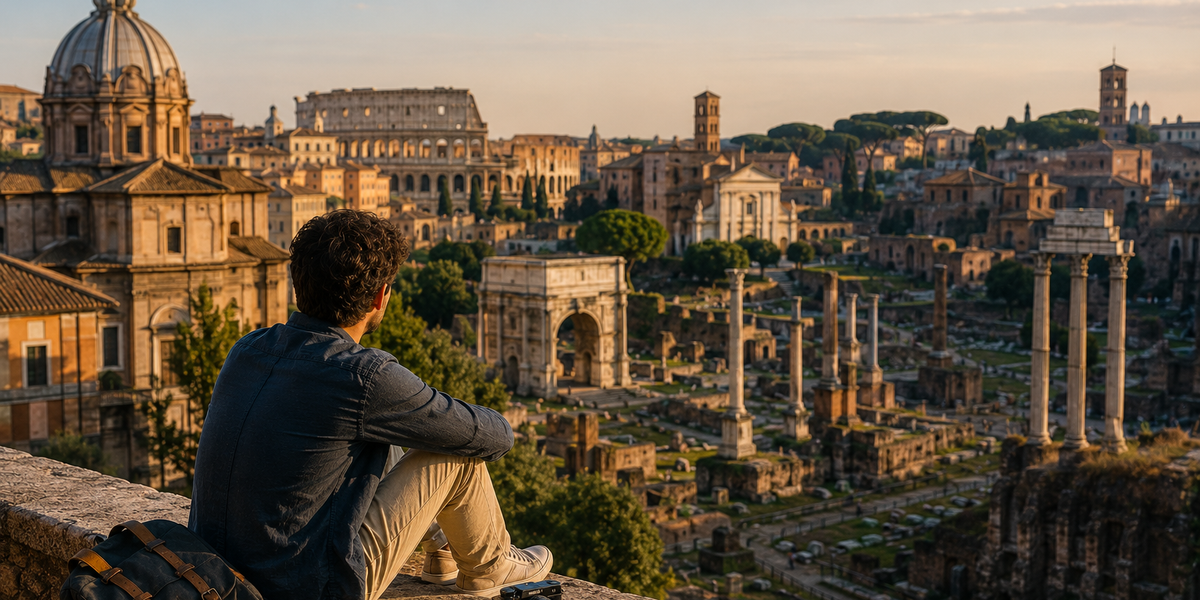
The Colosseum and Roman Forum provide the obvious introduction to ancient Rome, but the city’s historical layers extend far beyond them.
The Pantheon remains one of the most remarkable survivors of antiquity, while Renaissance palaces, Baroque fountains, churches, piazzas, and later neighborhoods show how repeatedly Rome has reinvented itself.
The best way to experience that history is often simply to walk.
In Rome, getting slightly lost is practically a sightseeing strategy.
Kyoto offers a very different relationship with the past.
For more than a thousand years, it served as Japan’s imperial capital, and its temples, shrines, gardens, traditional neighborhoods, and cultural practices remain central to its identity.
Famous sites such as Kiyomizu-dera and Fushimi Inari attract enormous numbers of visitors, but quieter experiences can be equally memorable.
Walk through older neighborhoods early in the morning. Visit a small temple without trying to photograph every corner. Notice traditional wooden machiya houses among modern buildings.
Kyoto is not a preserved historical set. It is a contemporary city negotiating the relationship between heritage, tourism, and everyday life.
That tension makes it more interesting, not less.
Few cities have changed identities as dramatically as Istanbul.
Known historically as Byzantium and Constantinople before becoming Istanbul, the city served as the center of powerful empires and sits geographically between Europe and Asia.
Hagia Sophia alone contains centuries of political, architectural, and religious history. Nearby, the Blue Mosque, Topkapı Palace, Basilica Cistern, and remnants of older fortifications add more layers.
But Istanbul’s history is not confined to monumental buildings.
Take a ferry across the Bosphorus and you begin to understand how geography shaped the city. Walk through markets, older neighborhoods, and waterfront districts and the past feels woven into modern routines.
History here does not sit quietly. It overlaps.
Few cities carry as much historical and religious significance within such a compact area as Jerusalem.
The Old City contains places sacred to Judaism, Christianity, and Islam, often separated by only a short walk.
Ancient walls, narrow streets, religious buildings, markets, archaeological remains, and communities with deeply rooted traditions make the city extraordinarily layered.
Jerusalem’s history is also inseparable from ongoing political and religious realities. Visiting thoughtfully requires understanding that the places travelers experience as historic sites can also be active places of worship, identity, community, and conflict.
It is not a city that can be understood through architecture alone.
Its history remains intensely present.
Dubrovnik’s old city makes an immediate impression.
Massive stone walls surround a compact network of streets, churches, squares, monasteries, and historic buildings beside the Adriatic.
Walking along the city walls provides the classic view: terracotta rooftops on one side and brilliant blue water on the other.
But Dubrovnik becomes more interesting once you understand its history as the Republic of Ragusa, a maritime republic that developed considerable commercial and diplomatic influence.
The city also carries much more recent history, including damage suffered during the conflicts of the 1990s.
Today it can become extremely crowded, particularly when cruise ships arrive. Early mornings and evenings reveal a quieter side.
Walking into the medina of Fez can feel like entering an entirely different system of urban life.
The narrow streets twist between homes, workshops, mosques, markets, schools, bakeries, and courtyards. Some passages are so tight that goods still move through them by hand or animal rather than vehicle.
Fez is famous for traditional crafts, including leatherwork, ceramics, metalwork, and textiles.
But what makes the old city compelling is that it remains more than an attraction.
People live and work within this historic environment.
A guide can be worthwhile, particularly at the beginning, not simply to prevent you from getting lost but to explain what you are actually seeing.
Athens makes it impossible to forget that civilizations build on top of one another.
The Acropolis dominates the city’s historical imagination, and seeing the Parthenon above modern Athens remains one of Europe’s great urban views.
Yet ancient history appears throughout the city.
The Ancient Agora, Temple of Olympian Zeus, Roman Agora, and archaeological remains around modern streets reveal how much survives beyond the most famous hill.
Then there is modern Athens: noisy, creative, covered in street art, full of cafés, and very much alive.
That contrast prevents the city from feeling like an enormous archaeological park.
Ancient Athens is always present, but modern Athens refuses to disappear behind it.
Gjirokastër rises steeply across the hills of southern Albania, its distinctive stone houses clustered beneath a fortress.
The historic center reflects centuries of Ottoman influence, with fortified houses, cobbled streets, traditional architecture, and views across the Drino Valley.
Inside some of the old houses, you can see how wealthy families once organized domestic life around elaborate interiors, guest rooms, fireplaces, and defensive features.
Above everything sits Gjirokastër Castle, which has watched over multiple eras of the town’s history.
The city feels particularly atmospheric in the quieter hours, when the steep stone streets empty and the architecture becomes the main attraction.
Museums can explain the past brilliantly. Books can provide context that no building ever could.
But historic cities offer something different.
They allow you to understand physical scale. You see how close the palace was to the market, how narrow the medieval street actually is, or how enormous a structure must have appeared to someone centuries ago.
More importantly, you see what happened afterward.
Cities were rebuilt, religions changed, governments rose and fell, buildings acquired new purposes, and generations continued living among what remained.
That is what makes the best historic cities so compelling.
They are not places where time stopped.
They are places where it accumulated.

Attention rarely feels important while we are giving it away. We glance at a notification during dinner. We half-listen to someone while thinking about what we need to do next. We watch a film while checking our phones, walk through familiar streets without noticing them, and finish entire days unable to remember much of what actually happened.

We have become very good at recognizing lives that look interesting. They involve constant travel, impressive jobs, beautiful homes, busy social calendars, ambitious projects, expensive restaurants, dramatic announcements, and enough photographs to prove all of it happened. Online, an interesting life can start to resemble a continuous highlight reel.
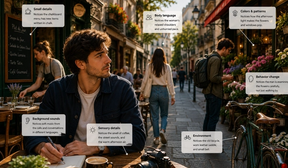
Some people seem to move through the world with a different level of resolution. They notice when someone has changed their hair slightly. They remember the name of the waiter from a restaurant they visited months ago. They spot an unusual building on a street everyone else has walked down a hundred times. They can tell when a friend’s mood has shifted before the friend says anything.
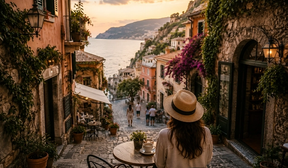
Sometimes you arrive somewhere completely unfamiliar and feel strangely at ease. You do not know the streets. You have no memories attached to the buildings. You may not even speak the language. Yet within a few hours, something about the place feels comfortable. You can imagine having a favorite café there, knowing which market to visit on Saturday, or walking the same route home every evening.
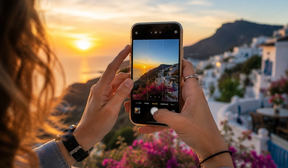
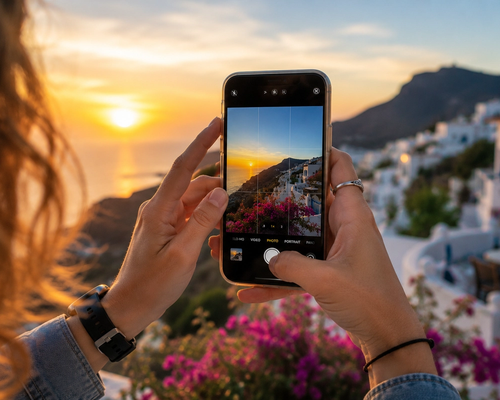
You do not need an expensive camera to take photographs worth keeping. The phone already in your pocket is capable of producing remarkably good images—and, more importantly, it is probably the camera you actually have with you when something worth photographing happens.

The internet is not something most of us can—or particularly want to—quit. We work online. We make plans through messages. We use maps, banking apps, calendars, news sites, music, podcasts, and group chats. Our phones contain genuinely useful tools alongside the apps that somehow turn five spare minutes into 45.