The Mountain Towns Worth Falling in Love With
H
Hassan Keith

Mountain towns have a particular kind of appeal. Maybe it is the way peaks appear at the end of ordinary streets, or how quickly a morning coffee can turn into an afternoon hike. Maybe it is simply that life feels different when the landscape is impossible to ignore.
The best mountain towns offer more than access to beautiful scenery. They have character of their own: old centers worth wandering, restaurants you want to return to, local traditions, and enough to do that you do not need to be an expert skier or serious hiker to enjoy being there.
From the Alps to the Andes, these are the mountain towns worth making part of the trip rather than simply passing through.
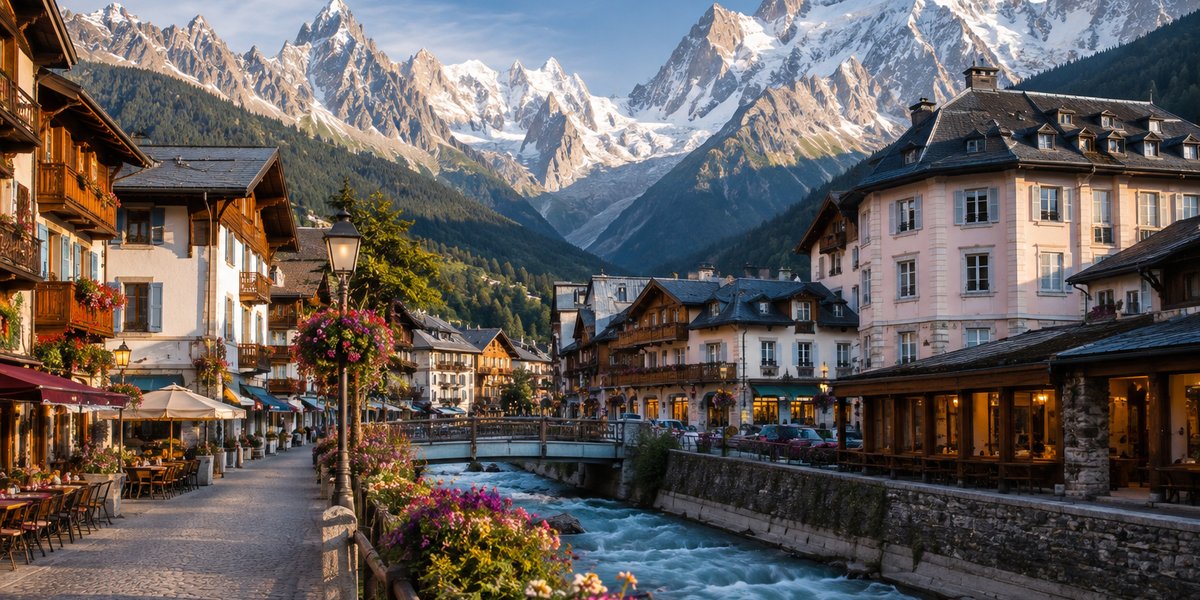
Sitting beneath Mont Blanc in the French Alps, Chamonix has been attracting climbers, skiers, and mountain lovers for generations.
The scenery is appropriately dramatic. Glaciers and jagged peaks rise above a lively town filled with cafés, restaurants, outdoor shops, and traditional Alpine buildings.
Winter brings skiing and snow sports, but Chamonix is just as compelling when the snow melts. Hiking trails, cable cars, and mountain viewpoints make summer one of the best times to explore the valley.
You do not need to be particularly adventurous either. Part of the pleasure is simply sitting outside with coffee while some of Europe’s most impressive mountains fill the background.
Zermatt has one geographical advantage that is difficult for almost anywhere else to compete with: the Matterhorn.
The mountain’s unmistakable shape dominates the landscape around this Swiss resort town, appearing between buildings and above hiking trails like something deliberately positioned for photographs.
Zermatt itself is car-free, which helps preserve its Alpine atmosphere despite its popularity. Electric vehicles move around town, but walking is often the easiest way to explore.
Winter is famous for skiing, while summer opens an extensive network of hiking routes.
Switzerland is rarely a budget destination, and Zermatt is no exception. But for spectacular mountain scenery combined with excellent infrastructure, it is difficult to match.
The Dolomites do mountains differently.
Instead of smooth Alpine peaks, enormous walls and towers of pale rock rise dramatically above valleys, villages, and forests. Cortina d’Ampezzo sits in the middle of some of the region’s most spectacular scenery.
The town has long been associated with skiing and glamorous winter holidays, but summer may be equally appealing.
Days can be spent hiking around mountain lakes, driving dramatic passes, riding cable cars, or stopping at rifugi for lunch with a view.
Then you return to town for an aperitivo and dinner.
That combination of serious mountain scenery and very Italian pleasures is difficult to resist.
Banff sits inside one of Canada’s most famous national parks, so nature is not something you need to travel far to find.
Mountains surround the town, while turquoise lakes, hiking trails, forests, and scenic drives begin almost immediately beyond it.
Lake Louise and Moraine Lake receive much of the attention nearby, but Banff itself makes a comfortable base for exploring the Canadian Rockies.
The town has plenty of restaurants, shops, and accommodation, which also means it can become extremely busy during popular periods.
Visit outside peak times if possible, and give yourself more than a couple of days. The landscape is too large to experience properly at a sprint.
If you asked someone to draw an idealized Swiss mountain village, there is a reasonable chance it would look something like Grindelwald.
Traditional houses and green meadows sit beneath enormous mountains, while cable cars and trains provide access to some of the Bernese Oberland’s most famous scenery.
Grindelwald is a practical base for hiking in warmer months and skiing in winter. It also connects easily with destinations such as Wengen, Lauterbrunnen, and the Jungfrau region.
But you do not need to spend every day chasing viewpoints.
There is something satisfying about simply walking through the village while cowbells ring somewhere in the distance and mountains occupy half the sky.
For travelers willing to go farther from Europe’s classic Alpine routes, Mestia offers an entirely different mountain experience.
Located in Georgia’s Svaneti region, the town is surrounded by the Caucasus Mountains and known for its medieval stone defensive towers.
The landscape is dramatic, but so is the culture.
Mestia serves as a base for hiking through valleys and villages, including routes toward Ushguli, one of the region’s most famous settlements.
Getting there requires more effort than arriving in a polished Alpine resort, and infrastructure can feel less predictable.
That is part of what makes the experience distinct. Svaneti still feels like a mountain region with its own identity rather than simply a resort built beside mountains.
Patagonia gets plenty of attention, but much of it is focused farther south.
San Martín de los Andes, in Argentina’s Lake District, offers mountains, forests, lakes, and a relaxed town atmosphere without feeling like a place you visit solely to complete a famous trek.
The town sits beside Lago Lácar and makes a natural base for hiking, scenic drives, kayaking, and exploring Lanín National Park.
Winter brings skiing, while warmer months turn the surrounding landscape green.
It is particularly appealing for road trips, with the famous Route of the Seven Lakes connecting the area to Villa La Angostura and eventually Bariloche.
Slovenia packs an impressive amount of mountain scenery into a relatively small country, and Kranjska Gora is one of the easiest places from which to enjoy it.
Close to the Julian Alps and Triglav National Park, the town provides access to hiking, cycling, skiing, lakes, and dramatic mountain roads.
Nearby Lake Jasna is particularly beautiful, while the Vršič Pass offers one of the country’s most memorable drives.
Kranjska Gora itself is compact and relaxed.
It works well for travelers who want Alpine scenery without the scale—or often the prices—of some of the region’s most famous resorts.
It is easy to treat mountain towns as bases.
You sleep there, wake up early, head into the mountains, and return when the day’s adventure is finished.
But the best ones become part of the reason you traveled.
You develop a favorite bakery. You recognize the route back to your hotel. You start looking forward to the evening when the mountains turn pink or disappear behind clouds.
And perhaps that is what makes mountain towns so easy to fall for.
They combine the grandeur of landscapes that make you feel very small with the comfort of places small enough to become familiar.
You arrive for the mountains.
Then somehow, it is the town you miss when you leave.

Attention rarely feels important while we are giving it away. We glance at a notification during dinner. We half-listen to someone while thinking about what we need to do next. We watch a film while checking our phones, walk through familiar streets without noticing them, and finish entire days unable to remember much of what actually happened.
We have become very good at recognizing lives that look interesting. They involve constant travel, impressive jobs, beautiful homes, busy social calendars, ambitious projects, expensive restaurants, dramatic announcements, and enough photographs to prove all of it happened. Online, an interesting life can start to resemble a continuous highlight reel.
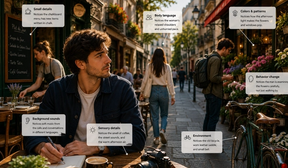
Some people seem to move through the world with a different level of resolution. They notice when someone has changed their hair slightly. They remember the name of the waiter from a restaurant they visited months ago. They spot an unusual building on a street everyone else has walked down a hundred times. They can tell when a friend’s mood has shifted before the friend says anything.
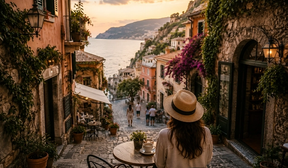
Sometimes you arrive somewhere completely unfamiliar and feel strangely at ease. You do not know the streets. You have no memories attached to the buildings. You may not even speak the language. Yet within a few hours, something about the place feels comfortable. You can imagine having a favorite café there, knowing which market to visit on Saturday, or walking the same route home every evening.
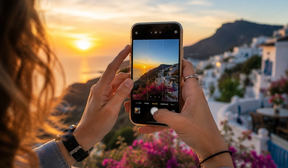
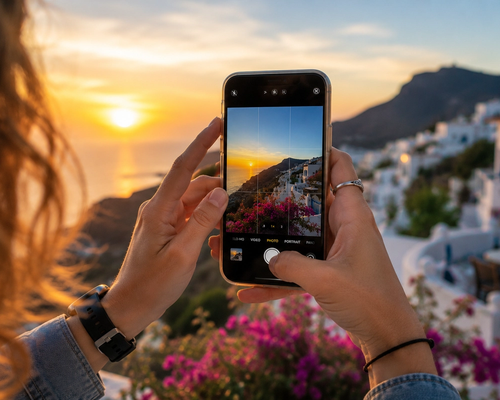
You do not need an expensive camera to take photographs worth keeping. The phone already in your pocket is capable of producing remarkably good images—and, more importantly, it is probably the camera you actually have with you when something worth photographing happens.

The internet is not something most of us can—or particularly want to—quit. We work online. We make plans through messages. We use maps, banking apps, calendars, news sites, music, podcasts, and group chats. Our phones contain genuinely useful tools alongside the apps that somehow turn five spare minutes into 45.