The Small Towns Worth the Detour
M
Maggie Garza

Big cities tend to dominate travel plans. They have the famous museums, iconic landmarks, major airports, and restaurants everyone has already saved on their phones.
But some of the places you remember most are the ones that require a little extra effort to reach.
Small towns offer a different rhythm. You can walk across them without consulting a map, return to the same café twice, and spend an afternoon wandering without feeling that you should be somewhere else. They are rarely packed with must-see attractions, which is precisely what makes them so enjoyable.
From mountain villages to seaside towns, these are the kinds of places worth changing your route for.
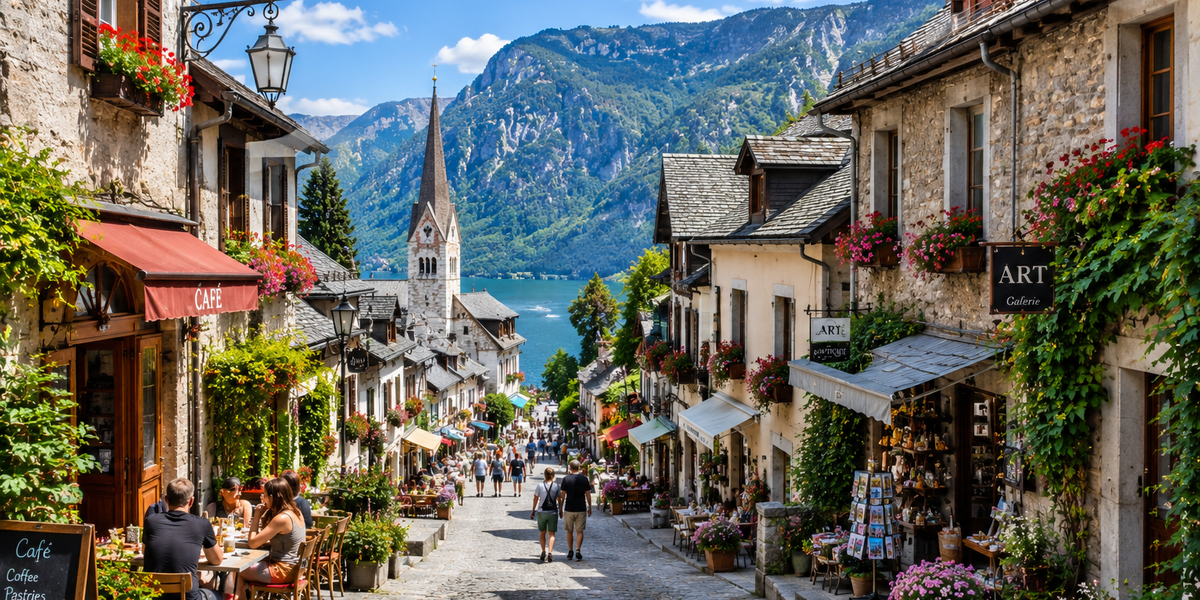
Hallstatt is hardly a secret anymore. Photographs of its pastel houses, church spire, mountains, and glassy lake have made it one of Austria’s most recognizable destinations.
And yet, the setting really is that beautiful.
The town sits tightly between the mountains and Hallstätter See, creating a landscape that feels almost impossibly picturesque. Walking through the center does not take long, but that is not really the point.
Come for the views, wander beside the lake, and give yourself time to explore the surrounding Salzkammergut region.
If possible, stay after the daytime visitors leave. Like many famous small towns, Hallstatt feels very different once the busiest hours are over.
Colmar looks suspiciously like somebody designed a town specifically for postcards.
Its historic center is filled with colorful half-timbered houses, canals, flowers, cobbled streets, and small squares. The area known as Little Venice is particularly picturesque, but the pleasure of Colmar comes from wandering rather than racing between landmarks.
The town also makes an excellent base for exploring Alsace.
Nearby villages, vineyards, and wineries stretch along the Alsace Wine Route, while the region’s food reflects both French and German influences.
Colmar is especially atmospheric around Christmas, but visiting outside the busiest periods gives you more space to appreciate the town itself.
Prague receives most of the attention, but Český Krumlov makes a strong argument for traveling farther south.
The UNESCO-listed historic center curls around the Vltava River beneath an enormous castle complex. From above, the town is a collection of red roofs, narrow streets, church towers, and river bends surrounded by green countryside.
You can see the major sights relatively quickly, but Český Krumlov rewards an overnight stay.
Once many day-trippers leave, the medieval streets become quieter and the town takes on a completely different atmosphere.
It is exactly the kind of place where an evening walk can become the highlight.
Italy contains enough beautiful small towns to fill several lists, but Alberobello is genuinely unlike most places you will visit.
Located in Puglia, it is famous for its trulli: whitewashed stone buildings with distinctive conical roofs.
Walking among them feels almost theatrical, especially in the most concentrated parts of town. Some have become shops and accommodations, while others remain homes.
Alberobello can become busy, so arriving early or staying overnight makes the experience more relaxed.
It is also worth using the town as an introduction to the wider region. Puglia is filled with olive groves, coastal towns, masserie, excellent food, and places that encourage a much slower style of travel.
Giethoorn is often introduced as the Dutch village with canals instead of roads.
That description is slightly simplified, but it captures what makes the historic center unusual.
Canals run between traditional thatched-roof houses, gardens, wooden bridges, and walking paths. Small boats glide through the village, making exploring from the water one of the most enjoyable ways to see it.
The popularity of Giethoorn means summer afternoons can be far from peaceful. Visit earlier in the morning, later in the day, or outside peak season and the appeal becomes easier to understand.
It is quiet travel at its best: walking, boating, eating, and not needing much of an agenda.
Kotor is technically a town, but its setting gives it the drama of somewhere much larger.
Its fortified old town sits at the edge of the Bay of Kotor, surrounded by steep mountains that appear to rise directly from the water.
Inside the walls, narrow stone streets lead between churches, squares, cafés, and centuries-old buildings. Above them, fortifications climb dramatically into the mountains.
Kotor has become a major cruise destination, which means timing matters. When large groups arrive, the compact old town can feel crowded.
Stay overnight, however, and you get to experience the quieter mornings and evenings when the town feels more intimate.
Sintra sits close enough to Lisbon to be one of its most popular day trips, but it feels like a different world.
Forested hills surround extravagant palaces, historic estates, gardens, and villas. Pena Palace receives much of the attention with its bright colors and hilltop location, but Sintra contains far more than a single landmark.
Quinta da Regaleira is filled with mysterious gardens, tunnels, and architectural surprises, while the surrounding landscape makes simply moving between sights part of the experience.
Trying to see everything in one rushed day can be exhausting.
Staying overnight—or simply choosing fewer places to visit—allows Sintra’s slightly dreamlike atmosphere to emerge.
Built across steep hills in southern Albania, Gjirokastër is one of the Balkans’ most distinctive historic towns.
Its old stone houses climb beneath an imposing fortress, with mountains stretching across the landscape beyond.
The historic center is compact enough to explore on foot, although the steep streets will give your legs a workout. Traditional houses, local restaurants, craft shops, and the castle provide plenty to fill a day without making the town feel like a checklist.
Gjirokastër also works beautifully as part of a longer journey through southern Albania.
The road itself becomes part of the experience, especially if you combine the town with mountains, archaeological sites, and the Albanian Riviera.
Small towns rarely compete with major cities in the number of things there are to do.
That is their advantage.
You stop measuring the day by attractions completed. Lunch takes longer. You notice architecture you would normally walk past. You start recognizing streets after only a day.
Of course, not every famous village will feel undiscovered. Some of the world’s prettiest small towns now receive enormous numbers of visitors.
The trick is not necessarily finding somewhere nobody knows about. It is giving the place enough time to become more than a photograph.
Take the slower road. Stay overnight instead of visiting for two hours. Walk beyond the main square. Have another coffee before leaving.
Sometimes the place that seemed like a minor detour on the itinerary becomes the part of the trip you talk about most when you get home.

Attention rarely feels important while we are giving it away. We glance at a notification during dinner. We half-listen to someone while thinking about what we need to do next. We watch a film while checking our phones, walk through familiar streets without noticing them, and finish entire days unable to remember much of what actually happened.
We have become very good at recognizing lives that look interesting. They involve constant travel, impressive jobs, beautiful homes, busy social calendars, ambitious projects, expensive restaurants, dramatic announcements, and enough photographs to prove all of it happened. Online, an interesting life can start to resemble a continuous highlight reel.
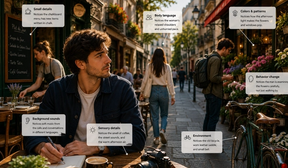
Some people seem to move through the world with a different level of resolution. They notice when someone has changed their hair slightly. They remember the name of the waiter from a restaurant they visited months ago. They spot an unusual building on a street everyone else has walked down a hundred times. They can tell when a friend’s mood has shifted before the friend says anything.
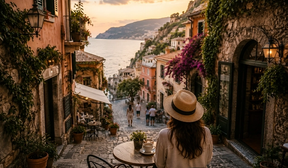
Sometimes you arrive somewhere completely unfamiliar and feel strangely at ease. You do not know the streets. You have no memories attached to the buildings. You may not even speak the language. Yet within a few hours, something about the place feels comfortable. You can imagine having a favorite café there, knowing which market to visit on Saturday, or walking the same route home every evening.
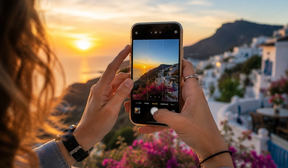
You do not need an expensive camera to take photographs worth keeping. The phone already in your pocket is capable of producing remarkably good images—and, more importantly, it is probably the camera you actually have with you when something worth photographing happens.

The internet is not something most of us can—or particularly want to—quit. We work online. We make plans through messages. We use maps, banking apps, calendars, news sites, music, podcasts, and group chats. Our phones contain genuinely useful tools alongside the apps that somehow turn five spare minutes into 45.